-
WV Wine Spectator Award Restaurants
If you’re a regular reader of this column, you know I will never just give you my impression of a wine without mentioning a food that is enhanced by it. Finding a compatible food and wine combination makes the whole dining experience so much more pleasurable. That’s especially important for restaurants.
We all have our favorite eateries around the state and even beyond the borders of this land of “purple mountain majesty.” And I have always maintained that a good meal can be transformed into a great dining experience when a complimenting wine accompanies it.

And with the emphasis on locally grown and produced foods and our early adoption of the farm to table movement, the quality of West Virginia restaurants has improved significantly, and so has their emphasis on providing well thought out and complimentary wine lists.
Therefore, wine lovers and foodies in West Virginia should be proud to know that the annual Wine Spectator restaurant awards were recently announced and 11 Mountain State establishments are among those receiving the prestigious honors.
According to the magazine, “Wine Spectator’s restaurant wine list awards program recognizes restaurants whose wine lists offer interesting selections, are appropriate to the cuisine and appeal to a wide range of wine lovers.”To qualify for an award, the list must present complete, accurate wine information. It must include vintages and appellations for all selections, including wines by the glass. The three categories of awards are: “Awards of Excellence;” “Best of Awards of Excellence;” and the “Grand Award.”
Only 2414 restaurants across world have received the “Award of Excellence,” including eight restaurants in our state. Three other WV restaurants, the Bavarian Inn in Shepherd Town, the Greenbrier’s Main Dining Room and Spats in the Blennerhasset Hotel in Parkersburg, received “Best of Awards of Excellence.” That’s quite an honor since only 1093 restaurants on earth achieved that distinction.
The state restaurants receiving “Award of Excellence” are: Bridge Road Bistro, Charleston; Provence Market Café, Bridgeport; The Block Restaurant in Charleston; The Final Cut Steakhouse, Charles Town Racetrack; South Hills Market and Café, Charleston; Sargasso, Morgantown; Savannah’s, Huntington; and The Wonder Bar Steakhouse in Bridgeport. Tell your friends and associates about the award winners and encourage them to patronize these restaurants.
While there are 11 Wine Spectator Award winners in the state, I’m confident many other establishments would qualify as recipients if they just took the time to submit their wine lists to the magazine. We have made excellent progress in upgrading the wine lists and the quality and number of excellent restaurants in West Virginia.
Entries for the 2017 Wine Spectator Restaurant Awards will be accepted from Dec. 1, 2016, to Feb. 1, 2017. Those interested in more information on the program can find it at restaurantawards@mshanken.com.
-
Summer Veggies and Wine
There is no question about it: I love to use my trusty Weber grill to barbecue all type of meat products, including pork spare ribs, beef steaks, whole chickens, rack of lamb and seafood, especially salmon. The wine choices for these edible treats are usually medium to full-bodied reds like zinfandel, cabernet sauvignon or syrah.
But I am also a fan of using my Weber to grill vegetables, particularly now that we have access to the bounty of the summer season. There is no better time than right now to add more vegetables to the daily dinner table. And since I love to purchase locally grown foods, I spend a great deal of time perusing the aisles of Capitol Market ‘s outdoor section for the fresh produce picked daily by area farmers.

Right now, you can find just about any vegetable, including corn, green beans, squash, sweet and hot peppers and, of course, tomatoes. With a little preparation and a lot of imagination, you can coax a whole new palate of flavors out of veggies when you grill them.
Grilling these edible plants also creates an added benefit for we wine lovers. The smoky, slightly charred flavors add a taste dimension that enables normally delicate vegetables like green beans, zucchini squash and broccoli to pair very well with medium bodied whites like sauvignon blanc. And my new “go-to” sauvignon blanc is the 2015 Chateau Fontenille ($12), a white Bordeaux that is the perfect match to the aforementioned grilled veggies.
But you don’t need a grill to enjoy these delicious vegan treats. In fact, one of my favorite summertime vegetable dishes is best prepared in the kitchen. The centerpiece of the dish is peppers. And man do I love peppers! Green ones, red ones and especially hot ones. I use peppers in a multitude of ways. I roast them, stuff them, fry them, freeze them, can them and, above all, I consume them almost daily.
Here’s a recipe for fried peppers I’ve borrowed from members of my Italian-American family. I’ve told you about it before, but it is worth repeating here today. This dish demands a medium bodied red wine with a good dollop of acid to enhance the flavors of the peppers. Try one or all three of these wines with the dish: 2013 Easton Monarch Mine Barbera ($25); 2012 Vietti ‘Tre Vigne’ Barbera d’ Asti ($17); 2013 Elk Cove Willamette Valley Pinot Noir ($26).
Fried Peppers Calabraze
Ingredients
Seven multi-colored bell peppers, sliced into five-inch long by one-inch wide pieces
Three hot banana peppers (optional) sliced the same as above
One large onion sliced into approximately three-inch lengths, a quarter-inch wide
One large ripe, red tomato, peeled and coarsely chopped
Three garlic cloves coarsely chopped
Three ounces of olive oil
Two tablespoons each of freshly chopped basil and oregano
One teaspoon of salt and coarsely ground black pepperHow To
Heat olive oil in a large frying pan (preferably cast iron) to medium high heat
Add onions and sauté for about three minutes, and then add all peppers
Use a spatula to stir the peppers regularly to prevent ones on bottom from burning
Add garlic and tomatoes to the mixture after about 15 minutes and continue stirring
Lower heat and cook until most of the liquid evaporates
Continue to sauté until the peppers and onions begin to caramelize (usually takes 25-to 30 minutes)
Remove from the stove, place in a large bowl and season with salt and pepper
Mix in the fresh basil and oregano and then serve -
Spicy Salmon Burger with Chili Lime Aioli
My mother was a very good cook, but the canned salmon patties she attempted to transform into something palatable were only marginally more appetizing than sautéed calf’s liver.
I’m sure there aren’t many of you who have been forced to experience the unique flavors of canned salmon. But if you grew up a few decades ago when there was little or no access to fresh seafood, your mom – like mine- would have added some type of canned fish product to the weekly family dinner menu.
That’s because doctors back then told parents that kids needed the vitamins, minerals and nutrients provided by seafood. So moms living in West Virginia, Iowa or other land locked places had little choice except to buy canned seafood products. The other option was to force-feed their kids daily spoonfuls of cod liver oil- a childhood experience only slightly less traumatic than an enema.

And while canned seafood products like salmon, tuna, and sardines are still available, we now have regular access to fresh seafood. So today, in honor of all those moms’ determined, but futile attempts, to create something edible from canned seafood, I am going to share a spicy salmon burger and chili lime aioli recipe with you. I think you’ll find that it is delicious, and made even more so with the wines I’m recommending.
While I prefer to grill the burgers, they can also be pan sautéed or baked for a short time in the oven. But the first step is to find fresh seafood from a shop or grocery store that has regular deliveries of this very fragile product. My go-to seafood monger here in the capitol city is Joe’s Fish Market on the corner of Brooks and Quarrier Streets (304-342-7827).
For the perfect roll to envelope this Spicy Salmon Burger, you might find suitable products at the grocery store, but I suggest calling ahead and ordering the delicious and fresh Brioche Buns from Charleston Bread at 601 Capitol St. (304-720-3022).
One of the attributes of the Spicy Salmon Burger is that the flavor components pair equally well with both white and red wine. You might try one or both of these wines.
2015 Chateau De Fontenille ($11)- From Bordeaux, this steely, yet rich white is a complex blend of sauvignon blanc, semillon, sauvignon gris and muscadelle. It marries nicely with the herbal nuances of the burger, and provides a refreshing counter to the spiciness of the dish.
2013 Chehalem Three Points Pinot Noir ($35) – From the Willamette Valley of Oregon, this wine has a mouthful of black cherries, spice and tea flavors. Rich, yet still perfectly balanced with a nice acid zing, it is very copacetic with the Spicy Salmon Burger.
Spicy Salmon Burger with Chili Lime Aioli
Ingredients:
One pound skinless salmon filet
Two tablespoons of chopped fresh cilantro
One egg
Two tablespoon of fresh lime juice
One-half jalapeno diced
Three teaspoons of diced onions
One teaspoon each of kosher salt, diced garlic, black pepper, cumin and chili powder
Two tablespoons of Panko or bread crumbs
One tablespoon of chopped chipotle in adobo sauce (optional)
Chili Lime Aioli
One-third cup mayonnaise or Miracle Whip
One tablespoon lime juice
One-half teaspoon of minced fresh garlic, smoked paprika, salt and black pepper
One-half teaspoon of ground cayenne pepper (optional) and chili powder
How To:
Combine all ingredients for the Aioli in a bowl, mix and refrigerate
Cut salmon into half-inch squares
Pulse in a food processor until salmon has the consistency of hamburger
Place salmon in a bowl and add the remaining ingredients
Mix ingredients and form into salmon burgers
Grill on a medium hot grill three minutes a side until firm
Place in a bun and add the chili lime aioli
Pour yourself a glass of wine and enjoy!
-
Wines for summer foods
Memorial Day is coming! Are you ready to get your picnic on? I am and today we’ll examine some vinous liquids that will enhance and elevate simple, but all-American, picnic and leisure time foods. So put out the porch furniture and crank up the grill because it’s (almost) summertime- and the livin’ is easy.
First of all, let me destroy the myth that warmer weather requires light, white wines that are cool and refreshing to pair with the chicken, seafood, salads and veggies we tend to consume more of in the summer. Hey, there’s nothing wrong with tasty, light white wines, but you don’t need to stop there. Trust me, you really can enjoy fuller bodied wines in the summertime – even big reds.
As usual, the food you’re cooking should determine what you’re drinking. But let’s start with lighter style whites and roses that fit the casual feel of outdoor cooking, and also pair really well with grilled foods. These lighter-style wines benefit from a little chilling, particularly the reds, which will provide a refreshing counterpoint to the sometimes spicy entrees being prepared.
You might choose a crisp, herbal or citrusy sauvignon blanc with foods such as dill poached salmon, grilled broccoli, roasted chicken seasoned with rosemary and olive or basil and pine nut pesto pasta. Here are some of my favorite sauvignon blancs to try with the above-mentioned foods: Dog Point Sauvignon Blanc and Brancott Sauvignon Blanc from New Zealand; Ferrari -Carano Fume Blanc, Groth Sauvignon Blanc, St. Suppery Sauvignon Blanc and Kenwood Sauvignon Blanc from California; and Robert Oatley Sauvignon Blanc from Australia.
Rose’s are just made for warmer weather and the beauty of these wines is their versatility in either being an aperitif or a match to your picnic foods. I especially like the drier versions that are especially excellent accompaniments to grilled foods, particularly sausages. Whether you prefer Italian, Polish, Bratwurst or some other pork-encased tube steak, rose’ is a great choice.
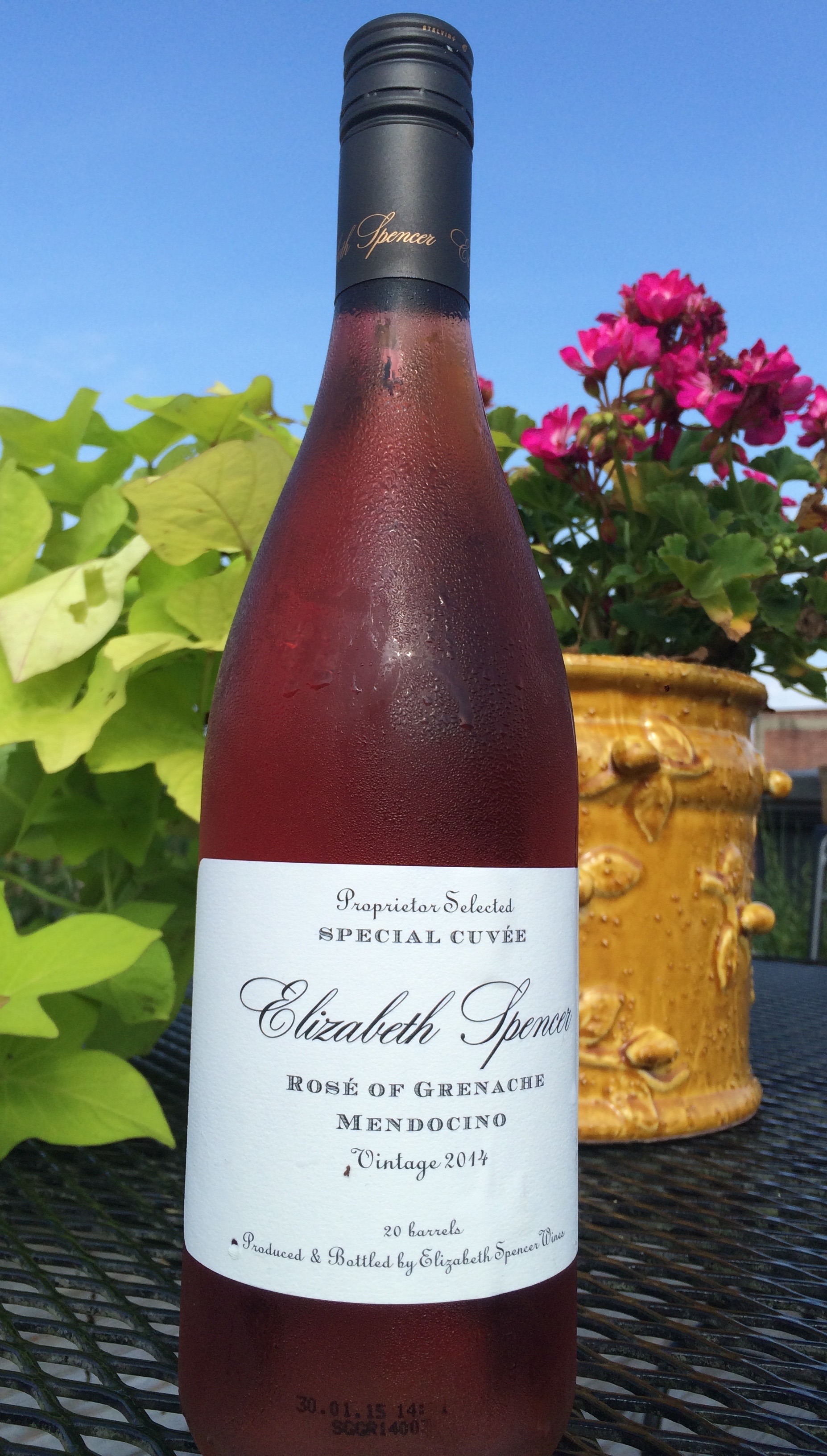
Here are some roses’, which again I recommend serving chilled, you may wish to try: Las Rocas Rose’ (Spain); Grange Philippe “Gipsy” Rose’ (France); Reginato Sparkling Rose’ of Malbec (Argentina); Mulderbosch Cabernet Sauvignon Rose’ (South Africa); Elizabeth Spencer Rose’ of Grenache (California).
Summertime gets me in a serious mood to fire up the old Weber and start grilling various hunks of meat that require medium to full bodied red wine. Whether you choose to grill hamburgers, rack of lamb, a rib-eye steak or a pork baby-backs, reds are my go-to wines.
Give one of these bottlings a sip: Easton Amador County Zinfandel, Villa Antinori Toscano Rosso (Italy); Domaine Serene Yamhill Cuvee Pinot Noir (Oregon); Zaccagnini Montepulciano d’Abruzzo (Italy); Bodegas Muga Crianza Rioja (Spain); Field Stone Convivio Red (California); Domaine De La Janasse Cotes Du Rhone Villages (France); Mercer Merlot (Washington State); David Bruce Pinot Noir (California) and Ridge Lytton Springs Zinfandel (California).
So whether you’re grilling rib-eyes or tube steak, there is always a wine (or several) for every food, and that makes summertime so much fun.
-
Merlot: bad rap, but good rep!
I know that I am among many wine lovers on this planet who was initially outraged to hear the lead character in the movie, “Sideways, ” brutally disparage merlot. And I think it is more than just a coincidence that merlot sales have hit the skids in the decade since the movie first appeared in 2006.
But soon after Miles uttered that epithet-laced opinion, I began to recalibrate my feelings about his critical remarks. In fact, I guess you could say that I am actually happy that gullible movie-goers/wine lovers actually believed (or suspended disbelief) Miles’ pronouncements about merlot.

In any event, prices have dropped fairly significantly and, if you are a merlot fan, I suppose you should thank the movie for providing us with an exceptional buying opportunity. Actually, it’s ironic that merlot would face the screenwriter’s wrath since there are certainly more deserving varietals such as pinotage or retsina to avoid. After all, the most expensive and sought after wine on earth is Chateau Petrus which is comprised entirely of merlot.
So let me say for the record that I am a merlot fan. I’m also a pinot noir fan – which the movie praises to high heaven. But today we’re talking merlot, and I want to tell you about some new wines that have arrived in our state featuring this much maligned grape.
I have always been a fan of merlot grown in moderate climates where the finished product can exhibit both strength and finesse. Merlot is a prolific vine and given too much sun, water or heat, the resulting wine can be flabby, alcoholic, watery and out of balance. This was the style of merlot that Miles was savaging in the movie. But that’s not what I will be describing for you today.
Field Stone Winery & Vineyard in the Alexander Valley of Sonoma County produces some exceptional merlot as well as other excellent red varietals too. Field Stone is small and family-owned, producing about 9000 cases of wine a year. This is one of the wineries that legendary wine maker Andre Tchelistcheff consulted for in years past. Field Stone also features one of the first underground wineries in California.
I tasted through some of their wines a couple of weeks ago and below are a few you might consider trying, especially with fuller bodied foods like grilled beef and pork as well as pasta dishes such as Cacio e Pepe (black pepper pasta) that I featured in a recent column. The wines are available at the Wine Shop in Capitol Market.
2013 Field Stone Convivio Red ($13) – Comprised of 74% merlot, 19% sangiovese and the rest a combination of malbec and cabernet sauvignon, this value blend is round, rich and full-bodied. In addition, you can sip and feel good about it since a portion of the proceeds from this wine is earmarked for Clinica Alianza – a non- profit medical center serving farm workers and their families among others in northern California.
2013 Field Stone Merlot Alexander Valley ($18) – Deep and full flavors of black cherries and spice are rounded out with light touches of toasty oak. This is a well-balanced merlot that will benefit from aeration in a decanter to soften up the fine tannins and allow the lovely aromas and flavors to express themselves.
2013 Field Stone Staten Family Reserve Cabernet Sauvignon ($50) – This one is a keeper. Deep and rich with extracted dark plum and blackberry notes, the wine was aged 21 months in French oak. Despite its concentrated and full-bodied characteristics, it is is exceptionally well-balanced and will improve with several years in bottle.
You might also try the winery’s 2013 Petite Sirah ($40) and the 2013 Alexander Valley Cabernet Sauvignon ($20). Both wines are exceptionally well made and demonstrate the consistency and quality of the entire Field Stone line.
-
Ramping up for Springtime
Ramps! Like snails, buttermilk or sweet breads, you either covet these “acquired tastes” or detest the very thought of them. I know people that would rather experience water boarding than consume ramps. Me? I love these little lilies, but I think I’m genetically predisposed to do so.
Let me explain.
My paternal grandparents hailed from Richwood, a small mountain village on the shores of the Cherry River. In the days before air-conditioning, I spent many happy summer days there, escaping the heat and humidity of my Harrison County hometown.
The legendary stories about Richwood and ramps are many, outrageous and sometimes true. The late Jim Comstock, publisher of the now defunct West Virginia Hillbilly newspaper, chronicled many of these tales in his publication. Here is a story that proves the old saying: “truth is stranger than fiction.” In this instance, Comstock became the lead character in a story that made nationwide headlines.

A Spring Harvest of Ramps A few decades back, Jim Comstock literally created a national stink when he added ramps to the printers ink for one edition of his newspaper. The Hillbilly had subscribers all over the country and even in foreign lands. The US Postal service was not amused and Comstock almost went to jail, but it sure did put his town and ramps on the map.
I cannot ever remember my grandmother cooking me up a mess of ramps during my idyllic summertime visits to Richwood, and it wasn’t until years later that I tasted them for the first time. But when I did, I was hooked after that first bite. That was years ago when I was home on leave from the Army, and about to be deployed overseas.
It happened late one evening when my next door neighbor brought over a six-pack (or so) of beer and a bundle of ramps. He suggested the best way to enjoy the little buggers was to sprinkle them with salt and eat them raw. Love at first bite? You bet. So we ate the entire bunch of ramps, chasing them down with several brews until the wee hours of the morning.
Well, I awoke that next day shivering. It seems my mother had opened every window and door in the house in a vain attempt to rid the abode of a foul odor permeating the place. I looked out the window and there was mom with a large container of Lysol spraying the stuff into the house from the outside. To put it mildly: there are better, far less offensive, ways to consume ramps- and without violating the EPA’s clean air act.
We are now in the midst of ramp season and many towns in the state, particularly in the mountains, are holding ramp feeds. However, I am not a fan of the traditional manner in which they are prepared. Most cooks fry them in lard or bacon grease and then add them to potatoes or (worse) pinto beans. This can cause folks to leave the events belching and flatulent while vowing never to get within a country mile of a ramp.
I prefer to sauté them in olive or canola oil and then add them to just about any vegetable dish from asparagus to potatoes to zucchini. There are also excellent grilled to accompany steak and can be added to scrambled eggs. I have also made them the key component of a pasta dish in which they are tossed with pancetta, asparagus and parmesan cheese in a white wine and olive oil sauce.
Sauvignon blanc is my favorite wine to accompany just about any ramp dish. I suggest pairing the above pasta recipe with the 2014 William Hill Estate Sauvignon Blanc ($17) or the 2014 Cakebread Cellars Sauvignon Blanc ($30).
So give ramps a try, but not at a one of the ubiquitous feeds where their flavor is obscured in pinto beans or fried potatoes. Simply sauté them in small amount of oil and add them to your vegetable dishes or pasta. Like onions and garlic, ramps are much less pungent when cooked and really do enhance the flavor of just about any dish.