-
A hidden gem from Friuli
As I have stated many times before, Italy is a boot full of wine. Each of its 20 regions have multiple wine appellations within them where an incalculable number of distinct grape vines are harvested each year and produce mind boggling amounts of vino.
When Americans think of Italian wine, most of us conjure up visions of Tuscany where the wines of Chianti and Brunello di Montalcino take center stage. Some of us know about the Veneto region where Soave, Valpolicella and Amarone are the principle wines, or in the Piedmont where Barolo and Barbaresco are highly prized bottles.
Today I’ll tell you about a wine in the little known region of Friuli-Venezia Giulia (pronounced Free-ull-ee Ven-eat-see-uh Julia) in the far north eastern section of Italy bordering Slovenia to the east and Austria to the north. The capitol city of the region is Trieste located across the Adriatic Sea from Venice.
The two most respected wine appellations of Friuli are the Colli Orientali and the Collio both of which are located in the north eastern part of the state. While some red wine is produced in Friuli such as merlot and refosco, the region is known primarily for whites, the most notable of which are Friulano, ribolla gialla, sauvignon blanc, chardonnay and pinot grigio
I recently tasted a wine from Colli Orientali that took my breath away, especially when paired with (in this case )the appropriately compatible dishes. This bottle is produced by a family better known for its exceptional Italian restaurants than for its wines. If the name Bastianich sounds familiar, you’ve probably seen the public TV shows hosted by Lidia, the chef and founder of the family’s restaurant empire.

And if you’ve been to any of the Eataly establishments located in Chicago, Las Vegas or other major US cities, or if you’ve had the pleasure of dining at Dell Posto or Felidia in New York, you understand that the Bastianich name is synonymous with great Italian cuisine. Lidia’s son, Joe Bastianich, founded the eponymous winery in 1997 in the very region of Italy where his mother was born.
The 2016 Bastianich Vespa Bianco ($30) is a medium to full bodied white that has ripe pear flavors with hints of honey and almonds. It is round and rich, yet crisp, with balancing acidity that should allow it to age gracefully for several more years. If you can’t locate it in your favorite wine shop, simply ask your purveyor to order it for you. The wine is a blend of chardonnay, sauvignon blanc and a local Friulian grape – picolit.
While this wine was a match made in heaven when we paired it with grilled Chilean Sea Bass, it blew us away when we sipped the last few ounces with our salad! My wife created a salad of arugula, thinly sliced fennel and Vidalia onions, fresh orange slices in a dressing of DiTrapano Extra Virgin Olive oil, some freshly squeezed orange juice and just a touch of aged Balsamic vinegar.
Oh My!! Can you say serendipity? I know it was just dumb luck because I probably would never have thought of intentionally pairing the wine with a salad, but I’m glad we had a sip or two remaining when we finished the Chilean Sea Bass. Goes to show you, it pays to be adventurous (or at least save a little wine for salad or dessert).
You might ask your wine shop folks to show you the bottles they have from Friuli. These are wines worth searching out.
-
Chimichurri with a Twang!
We’ve been hunkering down in the mountains for the past few weeks trying to avoid crowding other human beings and doing our best to social distance. It’s not hard to do because there just aren’t that many people wandering around in the forest.
That’s the good news. The challenge, of course, is to maintain some semblance of sanity through our self-imposed isolation. It’s easy for me because I’m naturally lazy and content to just lounge around watching reruns of the Beverly Hillbillies or reading the works of authors like Elmore Leonard, Joseph Heller and Kurt Vonnegut.
My wife, on the other hand, spends an inordinate amount of time cleaning, and then re-cleaning, the house. Our home is so immaculate now that she doesn’t seem to mind when I dirty up the kitchen or when I crumb-bomb the carpet. In these strange times, I’m finding that being slovenly might actually serve a higher purpose.

Anyway, like many of you, we also pass the time cooking – especially recipes of dishes that have been in the “on deck” circle for decades. So today, I’m going to share one of those on-deck recipes that should enhance just about any protein dish you wish to prepare. And I’ve added a special West Virginia ingredient I’ll call a “twang” to the recipe that will intensify the flavors even more.
Chimichurri has been variously described as a piquant sauce or a condiment; while others use it as a marinade. Argentina is given credit for originating the dish, and the ingredients can vary according to the style of chimichurri you want to concoct. I’m going to provide you with my take on chimichurri that includes the addition (or Twang) of that odiferous West Virginia lily known as the ramp. I actually harvested the ramps for this recipe in the woods near our home during one of our regular social distancing hikes.
In Argentina, Chimichurri is used as an accompaniment to grilled beefsteak, but it works equally well with pork, chicken and even fish. I love to use it with cuts of beef like chuck or skirt steak grilled over charcoal, and I always suggest pairing the chimichurri-enhanced beef with a rich red wine. Because chimichurri is made with a good dose of vinegar, you will need a wine that is round and even soft. Wines with a lot of acid, such as pinot noir or barbera, will clash with chimichurri. You might try merlot, red blends or even malbec like the one I’m suggesting below.
So strap on your big-boy pants and get ready for a real explosion of flavors!
Chimichurri with a Twang
Ingredients
One each, red bell pepper, sweet onion and jalapeno
Three cloves of garlic
One-half cup each Italian parsley and basil
One-quarter cup of fresh cilantro
One teaspoon each of red pepper flakes, kosher salt and coarse black pepper
One half teaspoon each dried oregano and ground cumin
Four ounces each of extra virgin olive oil and red wine vinegar
Ten or 15 small grape tomatoes
Two medium ramps (optional)
One medium size bowlPreparation
Dice red pepper, jalapeno, onion, basil, cilantro, ramps and parsley
Mince garlic
Cut grape tomatoes in half
Add olive oil, vinegar and above ingredients into a medium bowl
Stir mixture and add salt, cumin, oregano, red pepper flakes and black pepper
Allow to sit for a few hours or overnight in refrigerator
Serve at room temperature and spoon over or next to beef2013 Luna de Esperanza Super Premium Malbec, Uco Valley ($40)- This malbec is comprised of ninety percent malbec and five percent each of cabernet franc and syrah. With blackberry, mocha and coffee flavors, the wine’s richness and soft tannins marry nicely with the beef and chimichurri sauce.
-
Saint Patty’s Day Pasta
Saint Patrick’s Day is coming up this week, so I thought I would wow you with a great Irish recipe. So, while I’m not a Bangers and Mash or Soda Bread kind of guy, I am one-half Irish and I feel obliged to celebrate my Gaelic heritage by cooking up a Saint Patrick’s Day meal. However, I just couldn’t find anything that tickled my culinary fancy.
Then I had what I thought was a solution to the problem. Since I am also one-half Italian, why not find a recipe that uses the traditional culinary ingredients of Ireland and Italy to prepare a dish that pays homage to both storied nations.
Unfortunately, as I searched my treasure trove of cookbooks, I was unable to find any Irish-Italian dishes. I suppose I could try and create one. How about something like this: Corned Beef Marinara over Cabbage Fettucine; or Skirts and Kidneys Bolognese in Blood Pudding?

I must admit neither of the above mentioned combos excited my taste buds. So I decided to go in another direction. Since everyone knows that green is the national color of Ireland and that pasta is the national food of Italy, I’ve decided to combine these two characteristics to create a dish I’ll call Saint Patty’s Day Pasta.
Okay, I know, this is a bit of a stretch, but hang with me a bit longer because I think you’re going to love this recipe.
Two of the main ingredients in the recipe are Charleston Bread’s homemade spinach fettucine, and the lovely extra virgin olive oil from locally-owned Villa Ditrapano. Both the pasta and olive oil are green and they share the culinary stage in the recipe with arugula and basil to give this dish a definite emerald hue.
More importantly, this is one tasty dish! Check this out.
Saint Patty’s Day Pasta
One red bell pepper, small fennel bulb, medium onion,
Six Italian Roma or plum tomatoes
One pound spinach fettuccine
Four peeled cloves of garlic
Two links each of Italian and Andouille sausage
One 8 -ounce can of tomato sauce
Two ounces of cooking olive oil
One ounce of premium extra virgin olive oil
One-half teaspoon each of Kosher salt and freshly ground black pepper
Four ounces of grated parmesan cheese
One-half cup of pasta water
Two ounces each of fresh, chopped basil and arugulaCut bell pepper and tomatoes in chunks; onion and fennel in eighth inch rings
Place vegetables and garlic cloves on an oven pan, drizzle with regular oil and bake at 400 degrees for 30 minutes
Roast the sausage in another pan in same 400 degree oven for 40 minutes, turning once at 20 minutes
Chop cooked garlic in small pieces and combine with cooked vegetables in a sauce pan
Add tomato sauce to pan, cook at low heat for 30 minutes- add salt and pepper to taste
Cut sausage into half inch rings, set aside; then add to the sauce after 25 minutes
Cook pasta Al-dente and drain in colander
Combine pasta, sauce and half the parmesan to a large sauté pan over low heat
Toss together with fresh basil and arugula then add pasta water if needed
Plate pasta and sprinkle parmesan and drizzle premium olive oil over top of pastaMy wine choice to pair with Saint Patty’s Day Pasta is the 2016 Alexander Valley Vineyards Redemption Zinfandel ($25). This medium-bodied Dry Creek Valley red is round, rich and well balanced with spicy, blackberry flavors and just a hint of toasty vanilla.
Happy Saint Patrick’s Day. And may all your Leprechauns be green!
-
Shitake Stuffed Portobellos
I made the mistake of walking past a mirror right after the first of the year. The reflection of a rotund stranger stared back at me, and it took me several seconds to realize that the portly visage I was staring at was – ME!
Unfortunately, I have been having this same New Year’s wake up call for decades. Once again, I am vowing to moderate my excessive appetites in the hope of sculpting a visually more appealing version of myself. In other words, I’m going to try and eat less and choose foods that are healthy – and that actually taste good too.
I’m going to share a recipe with you for a dish that accomplishes both of the above-mentioned goals. Of course, I’ll give you a couple of wine pairing suggestions that will significantly enhance the enjoyment of the dish. It will be up to you, however, to moderate your wine intake. In my case, that means cutting back to only half a bottle.
Spoiler alert: If you do not like mushrooms, you won’t want to read any further.
I’m sure many of you have eaten Portobello mushrooms. You may have cooked them on the stovetop, or oven baked them with stuffing. You might have sliced and sautéed them with onions, garlic and other spices, and used them as a side dish. My recipe, which is meant to be an entrée, uses a little bit of each method just described, and you’ll have the option of making the dish with or without meat. In addition, this recipe also includes shitake mushrooms as part of the stuffing. And since mushrooms are full of vitamins and are a terrific source of fiber, this entree is also extremely healthy. So here you go.
Shitake Stuffed Portobellos
Ingredients:
Four to six Portobello mushrooms
One-half pound of sliced Shitake mushrooms
Four ounces of chopped onion, one tsp chopped garlic, one tsp of red pepper flakes (optional)
One-half cup each of shredded mozzarella and smoked gouda or provolone
Four ounces of bread crumbs
Two links of Italian sausage (optional) finely chopped
One half red bell pepper finely chopped, a handful of chopped spinach
Two ounces of extra virgin olive oil and a tsp. each of salt and ground black pepperPreparation:
Wipe Portobellos clean and scrape and discard gills from the mushrooms
Use one ounce of olive to rub Portobellos inside and outside
Place Portobellos on an oven rack and bake for 5 minutes in a 400F oven
Set aside Portobellos to cool
Discard stems from Shitakes and slice
Fry or microwave the Italian sausage and then finely chop
Sauté onions, garlic, red peppers and spinach using the remaining oil – set aside in a bowl
Add salt, pepper, cheese, bread crumbs and sausage to the bowl – stir and allow to cool
Spread the mixture evenly among the Portobellos and bake in 400F oven for 12 minutes
Serve immediatelyMy wine suggestions for the dish involve bottles that pair well with the earthiness of the mushrooms, and the overall spiciness of the dish. Pinot noir from Oregon has a ton of earthy nuances and also pairs exceptionally well with spicy food. You might try the 2017 Chehalem (Willamette Valley) Pinot Noir ($37).
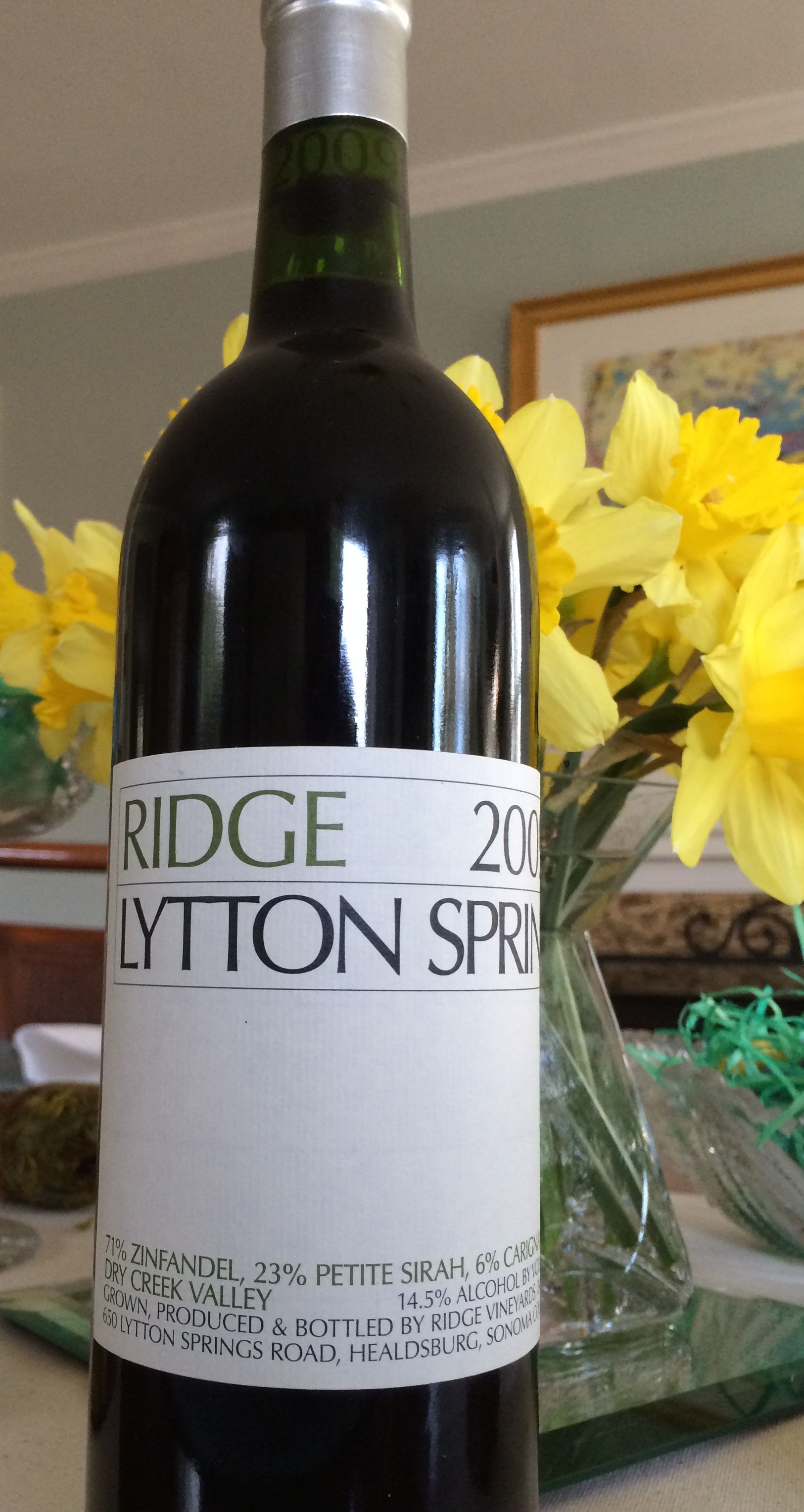
My other choice to complement the recipe is zinfandel. I’m recommending a medium-bodied and spicy zin with bright dark berry flavors. The 2017 Ridge Lytton Springs ($45) will make an excellent pairing with the dish.
-
Happy food, wine, and family!
Christmas is upon us and I am psyched! So, bring on the seven fishes, the Christmas dinner and even the twelve days because I’m ready and raring to go. And, as always, I will provide you with some vinous choices to enhance your holiday meals.
Of course, my first challenge will be to weather the (sometimes literal) storm of preparing the Christmas Eve fish extravaganza. I will use the outdoor gas grill to heat up the canola oil to 350F and then begin frying cod, smelts, squid and scallops. This can be tricky if the weather is raining or snowing heavily, but I’ll get it done – with the help of my eldest grandchild who has been my sous-chef for most of his post, pre-K life.
I’ll also brine and then hot smoke a side of salmon, while my wife constructs a pasta and clam dish. And there will be cocktail shrimp and other appetizers to get our palates properly tuned up. Since most of the fish will be deep fried, I find it’s best to pair them with white wines that are medium bodied, refreshing and even thirst quenching.

You might give these bottles a try. Italian whites: Arneis; Cortese di Gavi; Greco di Tufo; and Falanghina; California Chardonnay: Cakebread Cellars; Ridge Vineyards Santa Cruz Mountains; Far Niente; and Mer Soleil.
There is no standard, traditional Christmas day meal in our country. Depending upon your religious or ethnic background, you might enjoy everything from ham to goose, to turkey to beef. In homes where the ancestral heritage derives from the British Isles, Germany or other northern European locales, we Americans tend to lean toward these culinary options: turkey; prime rib roast or filet mignon ; or baked ham as the featured main course.
If you’re preparing oven-roasted turkey as the main course on Christmas day, these medium bodied wines will pair nicely: Chateauneuf Du Pape; Rioja; California merlot, Chianti Classsico or Cotes Du Rhone.
If your Christmas dinner features baked ham with a honey glaze, you have several more options, including red, rose or even white wine. You might select: Tavel Rose from Southern France; riesling from Alsace; Sonoma Coast pinot noir; or malbec from Argentina.
At our home, my wife will dry rub a bone-in prime rib roast with garlic, kosher salt and coarsely ground black pepper. Then she’ll roast it in the oven until it’s medium rare. Here are the wines I’m considering to accompany the rib roast: 2004 Ducru Beaucaillou (Bordeaux red); 2007 La Massa (Italian super Tuscan red); or 2016 Ridge Lytton Springs Vineyard Zinfandel.
Over the next two weeks, you will drink more than half of your yearly total consumption of sparkling wine. It could be Champagne or other sparklers like those produced using the Champagne method or by other vinous means of eliciting bubbles in still wine. So, whether it’s Brut Champagne, Cava from Spain, Prosecco from Italy or Cremant from Alsace, the apex of sparkling wine consumption will occur between Christmas and the New Year.
There is nothing quite like Champagne to ring in the New Year. Give one or more of these Champagnes a try: Charles Heidsieck Brut Millésime; Krug Grande Cuvee Brut; Nicholas Feuillatte “Blue Label” Brut; Veuve Cliquot Brut; and Piper-Heidesieck Brut Cuvée.
Sparkling wine from regions other than Champagne: Gusbourne Brut Reserve (England); Mumm Napa Cuvee, Roderer Estate Brut Anderson Valley and Iron Horse Russian Cuvee ( all from California); Lucien Albrecht Cremant d’Alsace (France); Segura Viudas Reserva (Spain); La Marca Prosecco (Italy); and Gruet Blanc de Noirs (New Mexico
Have a very Merry Christmas, a Happy Hanukkah and a prosperous New Year!
-
November: a palete pleasing month !
November is the most exciting and palate pleasing month of the year for both wine and food lovers. Serendipitously, the most anticipated weekday of the year for both groups falls on a Thursday in November. And since most wine and food lovers are one and the same, it’s prime time for those of us who love to eat and drink
Of course, every living, breathing, epicurean knows that Thanksgiving falls on the fourth Thursday of November. And if you’re a living, breathing, wineaux, you know that Beaujolais Nouveau is always released on the third Thursday in November. So let the celebrations begin!
If you haven’t already sampled the 2019 Beaujolais Nouveau, it is now available in wine shops and grocery stores around the state. The Nouveau is made from the gamay grape grown in the. Beaujolais region just south of France’s Burgundy appellation. It is always an easy quaffing wine meant to be a celebration of the recently completed harvest. You can expect Beaujolais Nouveau to be a fruit forward wine with strawberry flavors. It can be paired successfully with brunch- type foods, and you might even consider opening a Nouveau as an aperitif before dinner.
Thanksgiving dinner is a wine lover’s dream feast because the meal can be successfully paired with white or red, as well as light or full-bodied wines. With turkey as the centerpiece of the meal, and with the wide variety of side dishes accompanying the “National Bird,” you’ll have an almost limitless number of vinous options. That’s because turkey is blessed with meat that has different flavors, colors and textures. Add to this the manner in which it is cooked – from traditional oven baking, to deep frying, to grilling and/or smoking, and you have even more wine choices from which to select.

Stuffing for the turkey adds a whole other flavor dimension which, depending upon the nature of the dressing, opens up even more wine pairing possibilities. I’ll usually feature both white and red wines to go with the dinner, and then open a sparkler or late harvest sweet wine to pair with the pumpkin pie dessert. This Thanksgiving, I plan on using a few wines from a recent tasting at the Wine Shop at Capitol Market. Featured at the event were the wines from American winery Kate Arnold as well as from Spanish winery Torres.
As an aperitif, I’ll open a bottle of 2017 Vina Esmeralda Muscat ($16). This tasty wine is just slightly sweet with a spicy floral aroma followed on by peach and apricot flavors. I always feature both a white and red wine with the main course. This year, I’m opening a 2017 Kate Arnold Sauvignon Blanc ($16). This California wine has aromas of anise and herbs, mouth-watering citrus nuances and good balancing acidity. The wine should be an excellent pairing with my wife’s chestnut, sausage and sage dressing.
The turkey this year at our home will spend two hours on my Weber charcoal grill before being transferred to the oven to bake until it reaches 165 degrees F. This method of cooking the gobbler is the result of detente between my wife (oven) and yours truly (grill). After decades of marriage, I’ve decided to test my hypothesis ( i.e., that compromise is only slightly more satisfying than passing a kidney stone). Anyway, I will pair this culinary experiment with a pinot noir from Oregon. One that I had the pleasure of sipping at the aforementioned tasting.
The 2016 Kate Arnold Willamette Valley Pinot Noir ($23) has aromas of spice and earth and flavors of plum and blueberries with hints of vanilla and cola. It is a wine of excellent roundness and depth, with just the right dollop of acidity to make it a perfect match to your Thanksgiving meal. And I’m confident that the wine will do wonders for our détente turkey too.
Here’s wishing you a very Happy Thanksgiving!