-
Red wines for casual summertime dining
While we suffer through extreme heat and humidity in the waning days of summer, I generally prefer to sip light, white wine with my meals. Chilled sauvignon blanc, riesling, unoaked chardonnay and pinot grigio top the list of wines I choose to accompany with many of my summertime dishes. But I adamantly refuse to eliminate red wines from my list of summer sippers just because Mother Nature is in a bad mood.
However, I do select less intense reds because they are better companions to more casual, picnic or warm weather meals. And, importantly, I always chill my summer reds in the refrigerator for about 30 minutes before opening them. Today, I’ll provide you with the recipes for two easy-to-make summertime meals and suggest the perfect red wines with which to pair them.
Calabrian Fried Peppers and ValpolicellaThis dish brings back fond memories of my Calabrian grandmother. I can see her lovingly frying peppers just picked from her garden. I don’t have a garden, but I get my peppers from local farmers who sell them at the Capitol Market in Charleston. In addition to yellow, red and green bell peppers, I add Hungarian (hot) wax peppers which approximate the heat of a jalapeno. The beauty of this recipe is that you can adjust it to accommodate your tolerance for spiciness by limiting or omitting the hot peppers.
Preparation
Slice any combination of peppers into equal length strips. My usual mix is two each red and yellow bell peppers, one green bell and two Hungarian hots. To the mix, add one whole onion sliced into one-third inch rings, three large cloves of chopped garlic and two tablespoons each of chopped fresh basil. In a cast iron skillet or frying pan, heat three ounces of olive oil, and then sauté’ the pepper mixture on medium heat, turning the ingredients frequently to prevent scorching.During cooking, salt the mixture to taste and liberally sprinkle freshly ground black peppercorns. The dish is ready to eat when the veggies are supple and limber. Plate the peppers and top them with more chopped basil. These fried peppers can serve as a main course or as a spicy accompaniment to any meat or fish entrée. And the peppers make a sensational sandwich when heaped on slices of baguette or ciabatta loaves, like the tasty ones baked at Charleston Bread.

Calbrian Fried Peppers
Valpolicella, located in Italy’s Veneto region, is a lovely accompaniment to the dish. Produced from a combination of relatively obscure grapes (corvina, rondinalla and molinara), this red is a wine full of ripe cherry flavors and provides a delicious, refreshing and thirst-quenching paring for this spicy Calabrian pepper dish. Try these wines: 2022 Allegrini Valpolicella Classico ($20) and 2020 Zenato Valpolicella Classico Superiore ($18).Barbecue Chicken Thighs and Rioja
Barbecue means different things to different people. For some, it’s a verb as in: “I’m going to barbecue some hamburgers.” For others, barbecue is a noun and usually refers to a type of cooked pork or beef that is chopped, immersed in various sauces and served on a bun. To me, barbecue means a style of roasting various cuts of meat, seafood or vegetables on the grill. One of my favorites is dry-rubbed, barbecued chicken thighs.Preparation
Purchase a package of boneless, skinless chicken thighs and rub them with a simple mixture of two parts brown sugar, to one part each of kosher salt and smoked paprika. Combine the ingredients and rub them all over the thighs about 15 minutes before placing them on your gas or charcoal grill.Pair these sweet and savory thighs with Rioja – a red wine from northern Spain. Rioja (pronounced Ree-Owe-Hah) is made from tempranillo, a grape that features spicy, bright, red fruit flavors which marry seamlessly with the chicken thighs. I suggest you pair the dish with 2019 Marques De Riscal Rioja Reserva($24) or 2020 Marques De Caceres Rioja Crianza ($17).
John Brown is also a novelist. His two books – Augie’s War and Augie’s World – are available online and in bookstores around the state. The third book in the Augie Trilogy- Augie’s Wine – will be released later this year. You can find out more about his novels, and review all of his archived Vines & Vittles columns at wordsbyjohnbrown.com
-
Stuck in a wine rut? Try these refreshing alternatives
When I find compatible wine and food combinations, I have to force myself to try different pairing options and think outside the box… er…bottle. I suppose it’s because I’m a firm believer in the old adage, “if it ain’t broke, don’t fix it,” so I am very reluctant to risk suffering through, heaven forbid, a meal where the wine and food pairing is not simpatico. That would be as devastating and unpalatable as a loss to Pitt on Homecoming Day in Morgantown.
It’s all about priorities, and mine are rooted in hedonism and the endless search for gustatory nirvana. So, it is sometimes difficult for me to pass up tried and true combo’s like: grilled ribeye paired with a full-bodied, robust cabernet sauvignon; or lobster dunked in drawn butter and accompanied by a glass of rich and oaky chardonnay; or how about a silky pinot noir with roasted salmon or even a refreshing glass of sauvignon blanc with capellini slathered in a basil and pine nut pesto?
You get the picture, right? Well, I’m here to tell you it’s time to live a little on the wild side and try some wines that are not in your vinous wheelhouse. Today, I’ll suggest a few whites and reds that you might not have sipped, but which can serve as tasty alternatives to the old tried and true wines mentioned above.
White Wine Alternatives
If you are a chardonnay aficionado, you might try a wine called aligoté’ (Al-ee-go-tay). The aligoté grapes are planted in the Burgundy region of France where the more famous and expensive white (chardonnay) also grows. Like chardonnay, aligoté has ripe apple flavors, excellent acidity and a rich finish. Try it with roast chicken or pan sauteed white fish like cod.

If you regularly enjoy the flavors of sauvignon blanc, you probably would relish sipping falanghina (Foul-en-geen-uh). Falanghina is grown in the southern Italian region of Campania near Naples, and it has some of the same flavor characteristics as sauvignon such as herbal, floral and tropical notes. An excellent pairing to dishes like Frito Misto (fried seafood), or meals that feature asparagus and other herbs, falanghina is also a superb accompaniment to the aforementioned pesto pasta.
If you enjoy sipping pinot grigio on the deck or paired with appetizers and lighter seafood dishes, you should give picpoul de pinet (Pick-pull-da-pee-nay) a try. The wine is a mouthful to pronounce, but it is chock full of citrus flavors with a lovely nuance of minerality that pairs especially well with dishes like bouillabaisse or lighter flavored cheeses. This wine from southern France is also a great value with retail prices around $15 a bottle.
Red Wine Alternatives
Most wine lovers enjoy cabernet sauvignon and other full-bodied reds with hearty dishes like beef and pork roasts or full-flavored stews. If you’re tired of the same old, same old, switch things up with Chinon (She-non.) This red hails from the Loire region in France and is made from cabernet franc – a genetic relative of cabernet sauvignon. Chinon has many of the same flavor profiles found in cabernet sauvignon with a bit more herbal tones. Cabernet franc is often combined with cabernet sauvignon and merlot to create a supple blend. Chinon, however, is made with one hundred percent cabernet franc, and it’s a lovely accompaniment to roast pork tenderloin and grilled lamb chops.
I probably consume more pinot noir than any other type of red wine. That’s because of its suitability to a wide variety of foods from meat to fish and even spicy dishes. However, when I need a great red alternative to pinot noir, I often select Aglianico (Al-yawn-ee-ko). This southern Italian grape has earthy, smoky aromas with black cherry and blueberry flavors. It is, like pinot noir, a great accompaniment to spicy barbecue as well as smoked salmon and grilled burgers.
If you’re a fan of full-bodied California zinfandel and/or syrah, grenache might make an excellent alternative to those purple monsters, especially ones grown and produced in either Spain (where it is known as garnacha) or in Australia. Like zinfandel, grenache is a very versatile grape. Depending on the whim of the winemaker or the geographic location where it is grown, grenache can produce a medium-bodied wine or a really full-bodied, lush and dark berry flavored whopper. I usually seek out the fuller-flavored ones and, if that’s your preference too, be sure to have your wine shop salesperson know what youi’re looking for. My two favorite wines are Alto Moncayo Garnacha from Spain and Clarendon Hills Grenache from McLaren Vale in south Australia.
So, live dangerously and take a chance on alternatives to your everyday go-to bottles. You might be pleasantly surprised. If you’re disappointed, it still won’t be as bad as losing to Pitt.
John Brown is also a novelist. His latest book, Augie’s World, is a sequel to his debut novel, Augie’s War. Both novels are available in print and audio at Amazon. You can find out more about his novels and wine columns at wordsbyjohnbrown.com
-
Perfect Wines for Rack of Pork Agrodolce
Homo sapiens are complex beings. We like to think that we know what we like, and then we change our minds and make choices that surprise us. Take wine for example. For years, I had an aversion to drinking any type of sweet wine. But I know that was the result of too many traumatic youthful experiences with sugary, high-octane liquids pretending to be wine. And then, low and behold, I had the occasion to sip a late harvest riesling with dessert at a fancy restaurant and I realized that sweet wines, in moderation, can be truly enjoyable.
Yin and yang, ebb and flow, hot and cold: seemingly incongruous terms that oftentimes can complement each other. How about sweet and sour? “Agrodolce” (Ag-row-dole-chee) is a sweet and sour sauce that is featured in many Italian recipes to enhance meat and fish dishes. Today’s menu showcases a rendition of agrodolce that combines its sweet and sour components to enhance the delectable flavor of roasted pork.
Recently, I purchased a center cut pork rib roast (also referred to as rack of pork) from the great folks at General Steak and Seafood in Charleston. This roast is the pork equivalent of a standing beef rib roast or a rack of lamb. I used the agrodolce, like an Italian barbecue sauce, to baste each piece of meat that I cut from the roast once it was cooked. And, while I paired the roast with an Italian Chianti Classico Riserva (see below), pinot noir would make an equally good pairing with the dish. Pork roast, unlike beef or lamb, does better with light to medium bodied reds like sangiovese and pinot noir. You could also use white wine such as sauvignon blanc, viognier or a lighter-styled chardonnay to pair with the pork roast, but without the pungent agrodolce sauce.
This pork roast was cut from Berkshire hogs – a heritage breed originally imported from England in the early 1800’s. Berkshire meat is considered more juicy, flavorful and tender than meat from American bred pigs. However, I’ve also enjoyed the same type of roast from domestic animals, and the price per pound is about half of what you’ll pay for Berkshire pork. Regardless of what type of meat you choose, it’s important to note that pork roasts are significantly less expensive than beef or lamb. So Enjoy!
 Here are my two wine recommendations for “Rack of Pork Agrodolce.”
2019 Castello di Bossi Berado Chianti Classico Riserva($30) This Brunello-like, ruby red, medium-bodied Sangiovese is replete with dark plum, chocolate and spice flavors with a kiss of oak. It also features a nice dollop of bright acidity that makes it a perfect match to the savory richness of the agrodolce-enhanced rack of pork roast.
2021 Brewer-Clifton Santa Rita Hills Pinot Noir. ($50) One of the coolest climates on the west coast, Santa Rita Hills in Santa Barbara County has a very long growing season and a place where pinot noir flourishes. With aromas of strawberries and spice and flavors of ripe cherries and nuances of vanilla and earthy mushrooms, the wine stands up and enhances the rich roasted pork agrodolce.
Rack of Pork Agrodolce
Ingredients:
One four or eight rib pork roast
Two tablespoons ground black pepper, kosher salt, minced garlic, rosemary and tomato paste
One quarter cup each balsamic vinegar, plain white vinegar and dry red wine
Three tablespoons: honey and pan drippings from pork roast
One half cup of chopped onions
One teaspoon red pepper flakes and chopped parsley
One mashed anchovy
Preparation:
Mix one tablespoon each, salt, black pepper, garlic, olive oil and rosemary
Score the fat side of roast with a knife and rub the mixture all over the meat
Allow to rest in the refrigerator for at least eight hours or overnight
Remove meat from refrigerator one hour before roasting
Preheat the oven to 450 degrees and roast meat for 15 minutes
Lower oven to 325 degrees and roast until internal meat temperature is 145 degrees
Determine cooking time based on 20 minutes per pound
Remove meat from oven and tent up with foil for 20 minutes
Slice the meat into individual pork chops, and baste agrodolce over each piece
 For the Agrodolce:
Saute onions, parsley, anchovy and garlic in a small pan, adding salt and pepper
Add vinegar, tomato paste, pan drippings, wine, honey and red pepper flakes
Simmer agrodolce for about 15 minutes until liquid is reduced and thickened
John Brown is also a novelist. His latest book, Augie’s World, is a sequel to his debut novel, Augie’s War. Both novels are available in print and audio at Amazon. You can find out more about his novels and wine columns at wordsbyjohnbrown.com
-
Bravo Marcello! Grazie Mille
Discovering the symbiotic relationship between wine and food is one of life’s exquisite pleasures. While I’ve always enjoyed eating, I was not always a fan of wine. As a matter of fact, it took me several years to realize that wine could be more than just an inferior substitute for beer or hundred proof vodka. It wasn’t until after I returned from an all-expense paid tour of southeast Asia (courtesy of the US Army) that my plebian palate experienced the alluring, complex and addicting characteristics of wine.
At that time, I was pursuing a graduate degree at WVU, and my wife and I were celebrating a special occasion at the Montmartre – Morgantown’s fanciest restaurant of the day located in the basement of the Hotel Morgan. I had ordered a beer to accompany my filet of beef, but the waiter suggested a glass of red wine instead. I was about to decline until he said that if I didn’t like the wine, I wouldn’t have to pay for it. I accepted his offer, fully expecting to be disappointed. I was not. The wine by itself was tasty, but in combination with my steak, the dining experience was sublime. That epiphany changed the way I thought about wine – and food. As a result, I’ve been on a life-long mission to find and experience exceptional food and wine pairings.

A couple of weeks ago, I experienced one of those rare times when the entrée and accompanying wine were a perfect match. My wife and I were having dinner in Sarasota, Florida at a small Italian restaurant. Marcello Ristorante is located along a busy highway in small strip mall, and in a non-descript building. The place is the embodiment of the phrase, “looks can be deceiving,” because Marcello is one of the finest Italian restaurants in which I have dined. The owner of the eponymous restaurant, Marcello Aquino, is a self-taught master chef who perfected his culinary skills at his mother’s small Italian eatery in Sarasota, and then later in New York City restaurants.
Marcello is open for dinner service only, and the menu (which changes daily) is featured on a chalkboard that is rolled up to each table for patrons to view and make selections. There are nine tables in the main body of the restaurant along with a 12-seat table in an adjacent glass enclosed wine room where guests dine next to a wall of bottles. The chef is just a one-man show toiling in a small, open kitchen to create edible masterpieces such as Bahamian Lobster Tail Fra Diavolo, Florida Rock Shrimp with Gnocchi and Sage Cream along with a host of other mouth-watering delights.

The wine list at Marcello is voluminous with bottles from every Italian region, and with a special emphasis on Brunello di Montalcino. The Brunello portfolio alone features more than 300 different labels, making it one of the most extensive lists of that fabled Tuscan wine on the planet. Just as amazing is how reasonably the wines are priced. Most wines can be purchased for what you might pay for that same bottle in a wine shop, and some are actually priced below retail. For the superb quality of the wine list and the exceptional cuisine, Marcello Ristorante has earned the Wine Spectator’s coveted “Award of Excellence.”

For my entree, I chose a bottle of 2015 Le Potazzine Brunello di Montalcino. The wine was pure silk! With smoky, earthy aromas and spicy, ripe cherry flavors, this velvety wine was a perfect match to the chef’s hand-made pappardelle. The noodles were bathed in a white wine and olive oil sauce with asparagus, and topped with Parmigiano-Reggiano and shaved black truffles. If you would like to dine at Marcello Ristorante, be sure to call well in advance of your planned visit to book a reservation (941-921-6794) at this small, exquisite restaurant.
If you won’t be travelling to Sarasota any time soon, and if my description of the culinary gems at Marcello’s makes you hunger for an Italian food and wine fix, there are several excellent local establishments in the Charleston-Huntington region from which to choose. My go-to Italian restaurant here in Charleston is Ristorante Abruzzi which is adjacent to Go-Mart Ballpark on Morris Street. I also love to “mangia” Italiano at Rocco’s Ristorante in Ceredo-Kenova – just an hour down the road past Huntington.
Ciao Amici!
John Brown is also a novelist. His latest book, Augie’s World, is a sequel to his debut novel, Augie’s War. Both novels are available in print and audio at Amazon. You can find out more about his novels and wine columns at wordsbyjohnbrown.com
-
Valentine’s Day: Forget it at your peril!
I’m issuing a critically important alert to folks who share my gender: Valentine’s Day is fast approaching, and you better be ready!
Men, believe me when I say that special person in your life takes this annual holiday VERY seriously. I learned this the hard way several years ago when I arrived home from work one day to find the house dimly lit with candlelight, and the rooms suffused with heavenly aromas of freshly baked bread. On the dining room table was a carafe of red wine, a rose in a vase with a Hallmark card the size of an aardvark leaning against it. Could I have entered the wrong home? Was I in a parallel universe?
Unfortunately, I had arrived at the correct address, but I had forgotten it was Valentine’s Day. For the next several weeks there was a definite chill in the air, and it was especially frigid in one particular room in the house. It took me quite a while to earn my “get out of the doghouse card.” So now, February 14th is forever indelibly etched into the recesses of my feeble mind.
I know you won’t make the same mistake and you’ll probably shower your significant other with jewelry, flowers or candy. However, I also suggest adding a bottle of tasty (as well as tasteful) romance-enhancing wine to your card or other Valentine gift. And, since the traditional Valentine’s Day colors are red and pink, I’m recommending wines that highlight those particular hues.
Whether you celebrate the day with a nice dinner at home or at your favorite restaurant, you should start the celebration with a sparkling wine or Champagne to set the mood and make the event even more effervescent. Give one or both of these bottles a try.
Mumm Napa Cuvee M ($30) From the famous Champagne house of Mumm, this slightly sweet Napa Valley sparkling rose’ is chock full of raspberry and strawberry flavors. It also has nuances of toast, vanilla and honey, and it would be an equally good aperitif or dessert wine.
2020 Schramsberg Blanc de Noirs ($45) Produced from pinot noir grapes, this sparkler is made in a classic Brut Champagne style. It is a complex and layered wine featuring flavors of peach, apricot and lemon zest. It would be a lovely accompaniment to appetizer foods such as smoked salmon, or main course dishes such as pan-seared halibut.
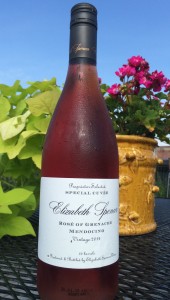
Another excellent wine choice for Valentine’s Day dinner is rose’. There are a great number of food friendly rose’s, including this one from Mendocino County California. The 2021 Elizabeth Spenser Rose’ of Grenache ($25) is a medium bodied wine that has subtle hints of pineapple and other tropical fruit flavors. The wine has excellent balancing acidity making it a great food wine. It pairs well with brunch type dishes as well as baked ham, pork tenderloin or even grilled salmon main courses.
If your Valentine date prefers red wine, you should try the 2021 Quilt Cabernet Sauvignon ($50). This Napa Valley full-bodied and rich cabernet has flavors of dark chocolate, blackberries and cola. It would be a perfect match for hearty meat dishes such as grilled beef tenderloin or roast prime rib.
For dessert, I would treat my Valentine to the decadently rich and sweet Dolce Late Harvest Semillon ($100). This 375 ML (half bottle) is a truly special treat with amazing flavors of apricot, honey and spice. It also features the unique flavor of botrytis-affected grapes that add a lovely tang of acidity to the wine known colloquially as the “Noble Rot.” Spectacular by itself, it would be an amazing pairing with crème brulee or cheesecake.
Happy Valentine’s Day!
John Brown is also a novelist. His latest book, Augie’s World, is a sequel to his debut novel, Augie’s War. Both novels are available in print and audio at Amazon. You can find out more about his novels and wine columns at wordsbyjohnbrown.com
-
In Vino Veritas
I recently visited California and the vineyard that annually provides the grapes I use to make homemade wine. For the last five years, the quality of those wines has far exceeded anything I’ve ever made before, and I wanted to meet the people that grow the grapes. The Lanza family vineyards are in Solano County just a quick 30- minute drive east of the Napa Valley. More specifically, the Lanza property is located in the Suisun (pronounced Sue-Soon) Valley.
I met with Ron Lanza, the oldest of four brothers, that manage the business, and who have sold their grapes for decades to some of the most prestigious wineries in northern California such as Caymus. In fact, because of the quality of the grapes in the Suisun Valley, Caymus built a tasting facility adjacent to the Lanza vineyards. The Lanza’s also have their own winery, Wooden Valley, and four generations of the family have been making wines there for 90 years. The wines are only available for sale at the tasting room, or through their online tasting clubs. If you’re interested, you can go to their website at: woodenvalley.com. Their wines are uniformly excellent.

Meeting with the Lanza family reminded me of my own immigrant roots and the importance of wine to the culture and tradition of the Italian family. There was always a jug of homemade vino on the family table, especially during family meals at my Grandparents’ home in the North View section of Clarksburg. So, I suppose it’s not surprising that I followed the wine-stained trail blazed by my Grandfather decades before. I know that memories of Grandpa and my uncles making wine left an indelible imprint in my mind. One particular vintage stands out.
My uncles and older cousins gathered in the side yard of Grandpa’s home to make wine. The grapes, mostly reds like zinfandel and petite sirah, came from vineyards in California’s Central Valley, and were then transported by train across the country. I remember helping unload the boxcar full of grapes, packed in 36-pound wooden boxes called lugs. The annual winemaking ritual was a joyous occasion for the whole family. There would be tables next to the old wooden grape crusher that held platters of Italian food and jugs of homemade wine. However, there were certain traditions that had to be observed before the winemaking festivities could begin. First, our parish priest would appear in the yard to bless the new vintage. He would pick up a small vial of holy water, sprinkle and then bless the grapes in the first lug to be crushed. Next, Grandpa would point to the only person among us who was not a member of the family and ask her to come forward. Lucia Carmaletti provided a service that was deemed necessary before winemaking in our family could commence.
Lucia, who was thought to be a gypsy, was hired to perform the ritual “pigiatura” or stomping of the grapes. The woman chosen to do the stomping was traditionally required to be a young maiden, but as my Uncle Frankie said, “the grapes can’t wait for maidens, or they’d never get crushed.” Lucia was neither young nor a maiden, but she was always ready, willing and able to assume the role of Vestal Virgin if called upon, and if she was compensated for her time.
So, Lucia walked up to where Grandpa stood next to a square wooden box filled with grapes. She was dressed in an ankle length, colorful dress, and she wore a purple headscarf, silver necklaces and copper bracelets on each wrist. She smiled at Grandpa, flashing two gold-capped front teeth and said with enthusiasm: “Salvatore, Che muscoli, bell’uomo!”
All the adults there howled in laughter, but Grandpa’s face turned beet red, and he looked sheepishly over at Grandma. She was not smiling. I looked at Uncle Frankie and asked him to translate. My uncle explained that Lucia said, ‘Salvatore, what muscles. You handsome man.’”
Lucia ignored the laughter, removed her leather sandals and stepped into the box. She put her hands on her hips and began dancing the Tarantella while delicately stomping on the grapes with her bare feet. She then invited the kids in the family to join her.
Memories such as these make me appreciate and cherish the culture and traditions associated with wine. They transcend the simple physical act of making it, and they are the foundation for my long and happy love affair with wine.
I am also an ardent disciple of the Roman philosopher, Pliny the Elder, who said: “In Vino Veritas” (In wine there is truth)
John Brown is also a novelist. His latest book, Augie’s World, is a sequel to his debut novel, Augie’s War. Both novels are available in print and audio at Amazon. You can find out more about his novels and wine columns at wordsbyjohnbrown.com