-
Tips for holiday wine shopping
Every autumn, just before Thanksgiving, Wine Spectator Magazine releases its “Top 100” wines of the year. This year the bottle chosen as the best wine of 2023 comes from Italy. It’s the 2018 Argiano Brunello Di Montalcino that retails for $90 a bottle. The Argiano was one of 9200 wines blind-tasted and rated by the editors of the magazine. Of those 9200, 5819 bottles were rated 90 or better on the magazine’s one hundred 100-point scale, and from those wines the top 100 were selected. You can check out the entire list in the current issue of Wine Spectator.
In looking over the selections, I was pleased to see that there are 44 wines in the top 100 that cost $30 a bottle or less. The wine rated number 31 (2022 Joel Gott Sauvignon Blanc) was the least expensive bottle on the list and is priced at $12 a bottle. The most expensive wine is a Napa Valley red blend (2020 Cathiard Family Estate) rated number 98 and going for $225 a bottle.
The Wine Spectator ratings substantiate a view I’ve long held that the price of wine does not guarantee the quality – good or bad -of what’s inside the bottle. In other words, if you pay $100 for a bottle of cabernet sauvignon, you can’t be certain that it will be superior to one costing $25. The converse is true also.
So obviously, you should use criteria other than price to judge the quality of wine. That’s why lists like the one from Wine Spectator, other wine rating publications or websites, along with recommendations from wine critics, all provide a valuable service (can’t you just visualize me reaching over my shoulder to pat myself on the back?). Some of us also use rating systems such as the 100-point scale where wines rated 90 and above are considered to be excellent. Others depend on buying wine from exceptionally rated vintages, and/or from specific wine regions like Bordeaux or Napa.

Aside from using these external wine evaluation options, the most failsafe way to judge the quality of wine is to taste it yourself, and then decide what to buy. However, there are more economical ways to evaluate wine that don’t require you to buy individual bottles. One option is to attend tastings that wine shops or wine appreciation groups regularly sponsor and conduct. At these events, the sponsoring organization usually provides, at a nominal fee, several different wines for attendees to taste and judge.
Here in Charleston, The Wine Shop at Capitol Market has been conducting wine tastings for decades. This shop also has knowledgeable staff who can guide you in your buying decisions. In addition, wine appreciation groups such as Les Amis Du Vin (The Friends of Wine) conduct regular tastings, most of which also feature dinners where food courses are paired with specific wines. I love events like these where the focus is on the symbiotic relationship between wine and food.
Another very cost effective and fun way of evaluating wine is to host or participate in home tastings. Each person at the tasting provides a bottle and each wine is then tasted, discussed and rated by the group. I always suggest tasting the wines blind. You do this by covering the label (by placing the bottles in plain bags) which eliminates any possibility of label bias (i.e., familiarity with certain wines and their prices).
Here’s another strategy you can employ to improve your chances of selecting a quality wine when you’re out shopping. Regardless of price, you should always try to select wines where the label indicates the specific origin of the wine. For example, a 2019 pinot noir that indicates it was produced in Monterey County, California should be superior to a 2019 pinot noir simply labeled as having been made in California. The more geographically specific the appellation of origin is on the label, the more likely that wine will be the better choice.
Now you’re armed with the tools to go out and find just the perfect festive gift for that special wine lover in your life. Happy Holidays!
John Brown is also a novelist. His latest book, Augie’s World, is a sequel to his debut novel, Augie’s War. Both novels are available in print and audio at Amazon. You can find out more about his novels and wine columns at wordsbyjohnbrown.com
-
Inquiring Wino’s want to know: Corks or Screw Caps?
When I first started writing about wine for the Charleston newspapers a few decades ago, my goal was to educate folks that wine should be an everyday accompaniment to meals.
Unfortunately, back then, the prevailing view of most beer-swilling and cocktail-imbibing Americans was that wine was an elitist product only consumed by ascot wearing, Hugh Hefner look-alikes with fake British accents.
It was my ardent goal to change that ubiquitous view. To poke fun at those widely held stereotypes, I created a mythical tasting panel comprised of people who were qualified in evaluating a certain category of wine. I named the group “The Southside Bridge Tasting Club,” and they were to evaluate wines for that segment of the wine drinking public that was — how shall I put it — more plebian in their tastes.
The group would gather monthly in the dead of night under the great bridge to sip and then critique various product specific wines of the time such as White Pheasant, Vito’s Thunder Mountain Chablis, Wild Irish Rose and many other popular octane-enhanced beverages. These wines had to meet only one condition: they must have screw caps so tasters would have quick and easy access to them.
Well, here we are 40 years later and, while wine is now socially accepted by just about every demographic group, there is still a controversy over which is the better wine bottle closure: corks or screw caps?

One of the first wineries in the US to adopt screwcaps on most of its wines was Bonny Doon back in the 1980’s – and not just on jug wines. Randall Graham, that off-the-wall, wildly entertaining wine maker and writer at Bonny Doon, was one of the first California vintners to feature screw caps on his premium 750ml bottlings. Since then, most US wineries now use them on at least some of their offerings, and almost all Australian and New Zealand wines are topped with screw caps.
Why do wineries consider using screw caps over corks? Well, it’s mainly an economic decision because screw caps are significantly cheaper than corks. At one time there was a concern (since debunked) that the trees from which corks are made could not meet world-wide demand. Actually, corks are made from the bark of trees and, while supply is not a problem, corks can sometimes cause wines to be “tainted.” This is a phenomenon where mold gets in the cork and negatively affects the taste and smell of the wine.
Some research suggests about one in 20 wines is corked. With that many wines potentially being returned, you can see why some wineries are going to screw caps and some even to plastic corks.
Aside from aesthetic concerns, I think screw caps are fine for wines which you will be consuming in the short term, particularly if the little suckers help keep the price down. And the reality is that more than 95 percent of all wines are made for short-term consumption.
For years it was thought that the problem with screw caps, or any enclosure which forms an airtight seal, is their inability to permit aging. More recent survey research proves that screw cap closed wines can also age well. So, while most of the older wines I have in my cellar are cork-finished, I would not shy away from aging any wine that has a screw cap closure.
To conclude, I don’t have a problem with screw caps. In fact, the first wine I ever opened was a 1.5 liter screw cap jug of Mad Dog 20/20. I sipped that wine from a paper cup under the Third Street Bridge in Clarksburg. (I have this thing about bridges and wine, don’t I?) Suffice it to say, I have a fondness for traditions – particularly those that are making a comeback
John Brown is also a novelist. His latest book, Augie’s World, is a sequel to his debut novel, Augie’s War. Both novels are available in print and audio at Amazon. You can find out more about his novels and wine columns at wordsbyjohnbrown.com
-
Celebrate Columbus Day with a Super Tuscan!
There’ a nip in the air, multi-colored leaves are falling from the trees and football season is in full swing! It’s officially autumn, and I’m ready for a hearty dinner with full-bodied wine to celebrate my favorite time of the year. And also, with Columbus Day here, I’m going to recommend two Italian wines to accompany the tasty recipe for bacon-wrapped pork tenderloin I’ve provided for you below.
I know the Columbus Day holiday has been widely critiqued for the cavalier manner and heavy-handed actions of the explorer for whom the holiday is named. Christopher Columbus does deserve criticism because he was, at best, directionally challenged. Here’s a guy who traveled west to find a quicker route to the east and ended up discovering North…. America. But Columbus did introduce our continent to Italian wine, and I’m grateful to him, at least, for that.
Most of you probably know about Italy’s Tuscan wine appellation. The region is noted for producing Chianti and Brunello di Montalcino, both of which are made from the ubiquitous local grape, sangiovese. However, the Tuscan wines I’m suggesting to accompany the recipe below lean heavily on a blend of Bordeaux-style grapes.
The primary grapes used in this blend are cabernet sauvignon, merlot, cabernet franc and even syrah – or some combination of them all. Some of the blends include small amounts of sangiovese, but the resulting wine is fuller-bodied and more age-worthy than most other Tuscan red wines. Legendary wine critic, Robert Parker, called the wine a “Super Tuscan,” and the term stuck.
Acceptance by the Italian government of the non-traditional blend that comprises a Super Tuscan came only after years of wrangling. The government did not prohibit wineries from using different grapes (like cabernet or merlot) than those approved for a specific Italian region, but the resulting wine had to be labeled as “vino de tavola” or table wine. That designation was viewed by the Super Tuscan winemakers as indicating that the wine in the bottle was simple and ordinary, and they insisted on a new label classification.
With extreme pressure from many influential Italian winemakers, the government finally established a new classification – IGT (indicazione geografica tipica) allowing wineries to produce wine from grapes not approved by them- as long as the label featured the “IGT” logo. The rest, as they say, is history and Super Tuscans are now considered to be among the most coveted of all Italian wines. Some Super Tuscans are also among the most expensive wines anywhere, but the two wines I’m recommending are delicious examples of providing exceptional quality for a reasonable price.
You might want to try one of the two Super Tuscans below with the bacon wrapped pork tenderloin recipe. I accompanied the dish with a medley of grilled onions, asparagus and yellow squash.
2021 Ornellaia Le Volte ($30)– The wine is comprised of Made merlot with smaller proportions of cabernet sauvignon and sangiovese. It has bright fruit flavors of ripe, red cherries with notes of cola and tea. The balanced acidity makes it a perfect accompaniment to the bacon wrapped pork tenderloin.
2019 Guado al Tasso “Il Bruciato” ($35) Antinori is one of the Super Tuscan pioneering wine families and Il Bruciato is a rich, jammy blend of cabernet sauvignon, merlot and syrah. With flavors of blackberries and chocolate and a touch of vanilla, this full-bodied wine should pair well with smoky, rich, meaty flavors of today’s recipe feature.

Bacon Wrapped Pork Tenderloin
Ingredients
One pound pork tenderloin
Six (or more) slices of thinly cut bacon
One-fourth cup of shredded mozzarella
One tablespoon each of chopped parsley and rosemary
One-quarter cup each of diced onions and red bell peppers
Three tablespoons of extra virgin olive oil, Balsamic vinegar and minced garlic
One teaspoon each smoked paprika, kosher salt and coarsely ground black pepper
Ten (or more) wooden toothpicksPreparation
Cut pork tenderloin lengthwise to create a deep pocket
Rub interior and exterior with salt, pepper and paprika
Mix balsamic, olive oil (half )and garlic and rosemary in a bowl for marinade
Place pork tenderloin in container or plastic bag and marinate for at least four hours
Use remaining oil to saute onions, parsley and red pepper and allow to cool
Remove tenderloin from marinade and place on a work surface
Mix sauteed veggies and cheese together and place in tenderloin
Wrap tenderloin completely with bacon strips
Use toothpicks to keep bacon wrapped tenderloin from falling apart
Place tenderloin on oven rack and set temperature t at 400F
Bake for 20 minutes or until internal temperature of pork is 145FRemove the toothpicks, slice into quarter inch rounds and serve
John Brown is also a novelist. His latest book, Augie’s World, is a sequel to his debut novel, Augie’s War. Both novels are available in print and audio at Amazon. You can find out more about his novels and wine columns at wordsbyjohnbrown.com
-
Teala
During winters when I was growing up in the Northview section of Clarksburg, I remember being forced to eat food I thought had been grown in tin cans. When I refused to eat the limp and tasteless vegetables and fruit that oozed from these metal containers, I was required to sit at the dinner table until I relented, and choked down a forkful of the despicable stuff.
I suppose there was some sort of nutritional benefit to consuming canned veggies and fruit back then, but I would have preferred starvation, a paddling from Dad or even being whacked on the knuckles again by Sister Grimalda for talking during class at St. James Grade School – a medieval, penal institution where I served more time in detention than in the classroom.
But summertime was a different story because all the adults in my Italian American family had vegetable gardens and fruit trees. None of my twenty or so first cousins – or I – had to be forced to eat freshly grown family produce. But we preferred to poach the tomatoes, cherries, peppers and apples from the plantings my family members so lovingly tended, and then had to protect from the horde of hungry and larcenous kids who refused to wait for the bounty to ripen.
Kids today, though, don’t have to eat anything from a can – even in winter. With internationally transported fruits and veggies available year-round, the only thing worth consuming from a can now is a cold beverage. And with everything currently at peak harvest in our neck of the woods, there is no better time than now to enjoy the cornucopia of freshly grown edibles. So today, I’m going to provide you with a recipe that takes advantage of many of these fresh and abundant vegetables.
Teala (pronounced Tea-aa-lah) is an Italian vegetable casserole that is a spicy, delicious, one-pot, no-meat meal that is taken to another level with an accompanying bottle of wine. And Teala is an equal opportunity dish when it comes to wine since it pairs equally well with both reds and whites. If I’m using a red wine to accompany Teala, I prefer to sip light to medium-bodied bottles such as Valpolicella or Barbera.
But Teala really shines when it is paired with white wine that features herbaceous and citrus flavors with a touch of minerality. Those flavor components are especially present in many California sauvignon blancs, and in Arneis, a white wine from northern Italy. Here are two of my favorite white wines to accompany Teala.
2022 St. Supéry Estate Vineyards Napa Valley Sauvignon Blanc ($26) – I visited this winery a few years back and was very impressed with their entire portfolio. However, I was especially pleased with the St. Supery Napa Sauvignon Blanc. The wine is bright and crisp, and features flavors of citrus with nuances of herbs and grass. It stands up to, and enhances, the savory summer casserole we call Teala.
2020 Damilano Lange Arneis ($24) – This northern Italian white is a fresh, herbaceous wine with flavors of ripe pears and citrus, and aromas of minerals and grass. It’s a lovely mouthful of wine that is not only a seamless match to the Teala, but also refreshes the palate and tames some of the zesty, spicy flavors in the dish.

Teala
Ingredients
Two medium sized zucchinis, peeled and cut into 1/8-inch thick rounds
Two medium sized yellow squash cut into 1/8-inch thick rounds
Three medium sized potatoes peeled and cut into 1/8-inch thick rounds
One medium sized onion, hot banana pepper and red bell pepper cut into thin vertical slices
Two ripe red tomatoes sliced thinly
One small bunch of parsley and one handful of basil chopped together
Four cloves of minced garlic
One third cup of unseasoned bread crumbs
One half cup of grated pecorino-romano cheese
One cup of grated mozzarella
Four ounces extra virgin olive oil
One teaspoon each of salt and freshly ground black pepperPreparation
Drizzle olive oil on the bottom of a casserole dish and rub all over
Layer the potatoes to cover the bottom of the dish
Top with salt, pepper, herbs, onions, garlic, peppers, breadcrumbs, cheese and drizzled oil
Layer zucchini and repeat the step above
Layer yellow squash and repeat toppings
Repeat above, including potatoes, until the casserole is full
Top layer should be drizzled only with olive oil, breadcrumbs and cheese
Cover with aluminum foil and place in a 375F oven
Bake for 1 hour 15 minutes covered and last 15 minutes uncovered to brown top
Allow Teala to rest for 20 minutes before serving*The dish will make a lot of liquid, so you may wish to drain some before servin
John Brown is also a novelist. His latest book, Augie’s World, is a sequel to his debut novel, Augie’s War. Both novels are available in print and audio at Amazon. You can find out more about his novels and wine columns at wordsbyjohnbrown.com
-
Keep peeling that onion!
When I was a teenager and knew everything there was to know about life, my father, in an attempt to enlighten me said, “Son, life is like an onion, there’s a lot of layers to it, and sometimes it will bring a tear to your eye, but you’ll be a wise man if you just keep on peeling.”
I just looked up at my dad with a blank stare and thought to myself: what the hell is he talking about? Of course, I didn’t verbalize what I was thinking. I simply nodded and continued to bungle my way through a decade of dissipation. And soon thereafter, I realized that I had just peeled back a layer of that onion and I wasn’t at all pleased with what I was seeing. I could only hope the next layer would reveal a wiser man.
I know what you’re thinking: ‘where the heck is HE going with this, and what does it have to do with wine?’
Hey, you’ll just have to be patient with me because I’m about to peel back another layer! And this layer reveals an undeniable truth: enjoying wine involves a fairly simple process. All you need to do to is put the wine in your mouth. If that simple experience is pleasant, then you’re probably happy. But to really get the maximum pleasure out of wine, you will need to peel back a little more of the onion.
That means finding the attributes that make exceptional wine, and that process is not simple. It’s complex and it can be challenging, but it’s also a lot of fun. I’m talking about searching for and finding wine that is more than just a pleasant quaff. A bottle that has unique and pleasing aromas, beautiful color and clarity, and one that also features incredible layers of flavor. The search for and discovery of such a bottle is the essence of wine appreciation. And while the journey may be long, it’s always pleasurable and extremely educational. Today’s primer will involve ways of finding the best possible red wine.
While I enjoy single varietal reds like pinot noir and cabernet sauvignon, I don’t think they have as much potential to produce the multi-layered, complex wine that bottles made from blends of grapes can. The greatest reds, like wines from Bordeaux, are blends of several grape varietals, including cabernet sauvignon, merlot, cabernet franc, malbec and petit verdot. Chateauneuf-du-Pape and the other red wines of the Rhone Valley in France can be made with as many as 13 varietals. The most common blends there are syrah, grenache and mourvèdre which many refer to as “The Holy Trinity.”
In the Napa Valley, one of the greatest red wines is Joseph Phelps Insignia. The 2018 Insignia is a blend of 87 percent cabernet sauvignon, 8 percent petit verdot, 2 percent malbec and 2 percent cabernet franc. One of the most expensive and prestigious wines in Napa, Opus One, is also a blend of five red Bordeaux-grapes.
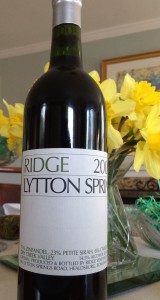
I am a big fan of zinfandel and I love it as a single varietal. However, I really think it’s better when it’s blended with other grapes. Ridge Vineyards is my go-to zin producer in California, but my favorite wines produced at the winery are Geyserville and Lytton Springs which, depending upon the year, can be blends of zinfandel, petite syrah, mourvèdre and carignane.
Of course, when you pair that exceptionally complex wine with an equally special meal, you’ve found culinary nirvana. So, enjoy the journey and hopefully you’ll find that extraordinary bottle out there somewhere. All you have to do is keep peeling that onion.
John Brown is also a novelist. His latest book, Augie’s World, is a sequel to his debut novel, Augie’s War. Both novels are available in print and audio at Amazon. You can find out more about his novels and wine columns at wordsbyjohnbrown.com
-
Dishing up an offer ‘You can’t refuse’
Summertime has come early this year with an extended period of San Diego -like weather, featuring warm temperatures, low humidity and cool nights. As a result, I transitioned earlier than normal from the full-bodied wines of winter to lighter and more refreshing whites and reds that are better suited to warmer weather. Likewise, my food choices have also morphed from heavier, protein-centric dishes to lighter vegetable and fruit enhanced meals.
Today, I’ll share a recipe with you for a summertime pasta dish that is light and healthy. It’s also delicious when accompanied by either of the two Italian white wines I’m recommending as pairing partners. And while each of the wines is made with different grapes, grown in distinctly diverse regions of the country, each bottle pairs exceptionally well with the pasta dish.
While Italian cuisine is considered world-class, the ingredients used to create dishes are simple and mainly local and farm fresh. Unlike French cuisine, which relies heavily on the addition of cream, butter and animal fat, Italian food is lighter and healthier. The main source of fat used to cook Italian dishes is olive oil which is universally considered healthy by medical experts. And when Italians do consume saturated fats -like cheese, prosciutto and sausage, – they do so in moderation, and then they sip a glass or two of wine to de-clog their arteries.
As a Magna cum Laude graduate of Whatsamata U, my credentials as a certified expert on all things Italian is beyond reproach. Well, that may be a bit of an exaggeration, but I have memorized every legendary line in the “Godfather” movies, and I do know a thing or two about Italian wine and food. So today, I’m gonna make you ‘an offer you can’t refuse.’ The following recipe, along with complementary wine pairing recommendations, is the offer you won’t want to refuse.

Vino e PastaIngredients:
One -half pound of Tagliatelle (or Fettuccine) pasta
Four tablespoons of extra virgin olive oil
One-half onion, one shallot and two cloves garlic chopped
Three teaspoons of capers
One cup of chicken stock
One-half cup of dry white wine
One dozen sun-dried or sliced, fresh cherry tomatoes
Kosher salt and ground black pepper to taste
Two cups of good parmesan (such as Parmigiano Reggiano)
Two tablespoons each chopped Italian parsley and scallions (green parts)
One teaspoon of red pepper flakes (optional)
One cup of pasta water- reserved.Preparation:
Grate two cups of parmesan
Sauté onions, garlic and shallots in olive oil in large pan
Add sun-dried or cherry tomatoes and capers to sauté pan
Add chicken stock and white wine and cook for about five minutes
Cook for ten minutes until liquid is reduced
Turn heat down to simmer and add salt and pepper to taste
Add tagliatelle to boiling water and cook until al dente
Drain pasta reserving one-half cup pasta water
Add pasta and water plus one cup of cheese to pan
Sprinkle parsley and scallions to the pan
Toss the mixture until it’s well integrated and then plate itPlace extra cheese and red pepper flakes in bowls for use at the table
The two wines I’m recommending you pair with Vino e Pasta come from regions at either ends of Italy, but both are harmonious accompaniments to the dish.
2020 Tiefenbrunner Pino Grigio ($21) – This crisp white from Trentino-Alto Adige in the extreme northern part of Italy (almost in Austria) is full of citrus and ripe green apple flavors. It is also a refreshing and complementary counterpoint to the richness of the pasta dish.
2021 Di Majo Norante Falanghina ($15) From the hills above Naples in southern Italy, this medium-bodied white has flavors of melon with nuances of peach and tropical fruit. It is complex and well-balanced, and pairs seamlessly with the Pasta e Vino.
John Brown is also a novelist. His latest book, Augie’s World, is a sequel to his debut novel, Augie’s War. Both novels are available in print and audio at Amazon. You can find out more about his novels and wine columns at wordsbyjohnbrown.com