-
Time to celebrate: The Judgement of Paris
The California wine industry got its start when Father Junipero Serra planted grape seeds at his San Juan Capistrano mission in 1769 near what is now San Diego. The string of Franciscan missions reached northern California nearly one hundred years later where the first commercial winery in the state – Buena Vista – was established in the town of Sonoma.
The wine industry in California has grown to nearly 3000 wineries and represents more than 80 percent of all wine produced in the United States. If California was a separate country, it would be the fourth largest wine producer in the world. Despite these impressive statistics, widespread acceptance and appreciation of California wine was a long time coming. In fact, through the first 75 years of the 20th Century, California wine received little recognition outside of the United States.
It was an event that took place forty-seven years ago in Europe that first focused attention on wine from the Golden State. The event, which came to be known as the “Judgement of Paris, was a wine tasting held on May 24, 1976, and every wine lover on this side of the Atlantic should celebrate that date. The consequences of that tasting for the California wine industry would prove to be monumentally important.
The tasting was the brainchild of Steven Spurrier, an Englishman who owned a wine shop in Paris called La Cave de la Madeleine. Spurrier also operated a wine school whose six-week courses were regularly attended by French oenophiles, chefs and sommeliers. Over the years, Spurrier developed a close relationship with winemakers in Bordeaux and Burgundy. However, unlike most European wine experts, Spurrier recognized the potential quality of California wines, particularly the ones being produced in Napa Valley.
As a justification for inviting the California wineries to compete in the tasting, Spurrier cited the American bicentennial. He had organized the event and he invited an expert, all-French, wine tasting panel consisting of some of that country’s most famous sommeliers and restauranteurs. To rule out any home-cooking, this was to be a blind tasting and none of the judges would be able to see the labels. At that time, the French didn’t consider any country’s wines to be the equal of what was being made in France, and they scoffed at any suggestion that American bottles would stand a chance.

Six Cabernet Sauvignons and six Chardonnays – all from California- competed against some of the greatest of all red Bordeaux and white Burgundy wines. For example, one of the world’s most highly acclaimed Bordeaux reds– 1970 Chateau Mouton Rothschild, and one of the world’s most famous White Burgundy (chardonnay) – 1973 Joseph Drouhin Beaune Clos des Mouches – were among the French bottles against which the wines of California would compete.
To the shock of the wine world, when the results from the French judges were tallied up, Napa Valley wines were awarded first place in both categories! The 1973 Chateau Montelena Chardonnay won first place in the white wine category, and the 1973 Stags Leap Vineyards Cabernet Sauvignon was judged first among all the reds. By the way, both Chateau Montelena Chardonnay and Stags Leap Cabernet are still producing excellent wines and remain among my favorite wineries in the Napa Valley.
A reporter from Time Magazine was the only credentialed journalist who attended the tasting, and his story did not appear in the magazine until a week after the event. But once news of the wine tasting was widely disseminated, California wines gained universal respect, credibility and acceptance. The fact that two upstart Napa Valley wines were voted the best in each of the two categories being evaluated, and by a tasting panel comprised of all French judges, astonished everyone in France and across the world.
The top-scoring reds were: 1973 Stag’s Leap Wine Cellars from the Napa Valley, followed by 1970 Chateau Mouton-Rothschild, 1970 Chateau Haut-Brion and 1970 Chateau Montrose. The top four chardonnays were: 1973 Chateau Montelena (from Napa) 1973 Meursault-Charmes and two other Californians, 1974 Chalone from Monterey County and 1973 Spring Mountain Chardonnay (Napa).
In his 1976 Time Magazine article on the event, reporter George Taber wrote: “The U.S. winners are little known to wine lovers, since they are in short supply even in California and rather expensive ($6 plus). Jim Barrett, Montelena’s general manager and part owner, said: “Not bad for kids from the sticks.”
Indeed!
John Brown is also a novelist. His latest book Augie’s World, is a sequel to his debut novel, Augie’s War. Both novels are available in print and audio at Amazon. You can find out more about his novels and wine columns at wordsbyjohnbrown.com
-
Wines to Ramp-up Springtime
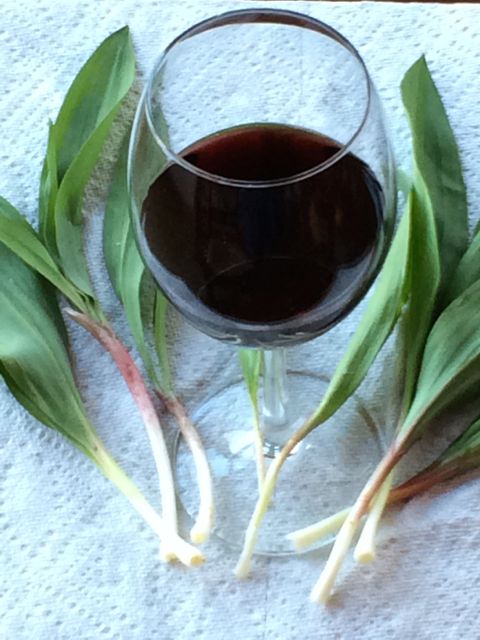
It’s the end of April and, like many other mountain state residents this time of year, I’m excited to sample the latest crop of allium tricoccum – more commonly known as ramps. You can count me among those who have waited impatiently for the little buggers to peek out of the forest floor. For weeks now, I’ve checked my own special mountain ramp patch for the green shoots (resembling the leaves on scallions) that signal their arrival. Finally, they appeared, and I spent an hour last week digging them out of the ground– one by one – until I had what we refer to as a “mess” of the odiferous lilies.
There are any number of ramp feeds around the state now, and you’ll have ample opportunities to sample menus featuring them. However, most of the cooks at ramp festivals smother the flavor of these wild leeks by adding them to dishes like pinto beans or fried potatoes. I suppose ramps do add a distinct flavor component to bean or potato casseroles, but the true flavor of these delectable veggies is too faint when they’re buried under an avalanche of carbohydrates.
I’m not suggesting that you eat uncooked ramps– although that was how I first consumed them. I was still living at home when, late one night, a friend came into the kitchen with a mess of ramps and 12-pack of Carling Black Label. After shaking the dirt off the ramps and rinsing them in cold water, we proceeded to sprinkle them with salt and eat them raw, chasing them with the Black Label.
When my mother came to wake me the next morning, she was wearing my grandfather’s World War I gas mask and carrying an industrial size can of Lysol. She was not amused. If you ever do decide to eat them right out of the ground, make sure the people who live within a mile of you have fair warning. This is to prevent them from losing consciousness or from reporting you to the EPA.
I now prefer to eat my ramps cooked. I like to spark up whatever comprises the main dinner course with the little devils, and I especially love to douse them with olive oil, salt and pepper, and then grill them over low to medium heat. Prepared in this manner, they lose much of their pungency, and they become a delicious accompaniment to any grilled meat, vegetable or seafood dish.
So, what wine pairs best with cooked or grilled ramps? That largely depends on what main course with which you accompany them. Actually, sauvignon blanc and other well-balanced whites can be a copacetic pairing with ramps in seafood dishes, or if you combine them with veggies like asparagus, green beans or broccoli. If you’re adding ramps to grilled meat, you should use medium-bodied reds like sangiovese, pinot noir or barbera.
White wine is also a great accompaniment to ramp and veggie pasta dishes. See the recipe below along with a couple of tasty wines to pair with the dish. Enjoy!
Ingredients:
One small bunch (ten or so) cleaned ramps
One half pound of fresh asparagus
Two slices of thick sliced bacon
Three tablespoons of extra virgin olive oil
One pound of penne pasta
One teaspoon of red pepper flakes (optional)
One cup of grated Parmigiano Reggiano cheese
Salt and pepper to tastePreparation:
Dice two pieces of bacon, sauté until crisp then put bacon onto paper towels
Reserve one tablespoon of bacon fat and add olive oil to sauté pan
Chop approximately ten ramps (white and green parts) and the asparagus into 1/2-inch pieces
Sauté the ramps (white parts) and asparagus in the oil and bacon fat until tender
Reserve the green leaf parts to add as a garnish to the finished pasta
Cook the pasta (al dente) in a large pot and reserve one cup of the cooking liquid
Transfer the cooked pasta to the sauté pan and add the reserved cooking liquid
Mix the pasta into the sauce and add the cheese and red pepper and salt to taste
Serve with the green ramp leaves as a garnishWines for the recipe:
2019 Grgich Hills Napa Valley Sauvignon Blanc ($31) – This wine has citrus flavors wand sage-like herbal nuances with surprising depth and medium weight. It’s also very well balanced with fruit richness and acidity, and melds perfectly with this ramp-enhanced pasta dish.2021 Bici Verdicchio de Matelica ($22) – Pale golden in color, this central Italian white has ripe green apple flavors with bracing acidity balanced by a slight tropical richness. It allows the ramp and veggie pasta to shine.
John Brown is also a novelist. His latest book Augie’s World, is a sequel to his debut novel, Augie’s War. Both novels are available in print and audio at Amazon. You can find out more about his novels and wine columns at wordsbyjohnbrown.com
-
If only Homework was this much fun
I am always fascinated by how we make choices regarding the wines we purchase and drink. Whether for everyday consumption or for special occasions, we can all agree that quality wines are worth seeking out. I spend an inordinate amount of time perusing the shelves of beverage shops, surfing the internet and reading food and wine magazines all in the quest to find that next bottle of liquid bliss. But casting hyperbole aside, I’m really not searching for the perfect bottle of wine. Just one that tickles my taste buds and doesn’t break my piggy bank.
Those of you who faithfully read my ramblings (thank you, by the way) know that I am also looking for wines that offer value as well as quality. When I first fell in love with the fruit of the vine – not long after dinosaurs roamed the planet- it was easy to despair of the notion that you could find good wine at reasonable prices. And, yes, there are still stratospherically priced wines that seem to defy conventional economics, especially ones from old world places like Burgundy or Bordeaux. And there are several California wines that have been granted (not sure by whom) “iconic” status and can fetch upwards of a thousand dollars a bottle – or more.
But, brothers and sisters, let me loudly declare this from my wine-stained pulpit: there has never been a time like now to find good wine at reasonable prices. You just have to do your homework! And that involves sorting through all the vinous clutter out there to find the good stuff. Today, we’ll explore a few ways to make your homework assignment easier.
First, you might check out wine regions that are less well known, but which offer good tasting value wines. For example, instead of looking for wines made in the highly regarded Napa Valley, consider varietals from lesser-known regions of California such as Lake County, Paso Robles, or Lodi. The same goes for wines produced in the most sought after foreign wine appellations. Instead of looking for bottles from Bordeaux or Burgundy, consider other French wines like ones from the southern Rhone Valley or Languedoc -Roussillon.
You can also find tasty wines with modest pricing by switching from well known varietals like cabernet sauvignon to reds like sangiovese, petit sirah or cabernet franc. The same goes for trendy whites like chardonnay. You might consider trying wines such as sauvignon blanc from New Zealand, Alberino from Spain or Verdicchio from Italy. And forget about pricey Champagne. Instead, search for pleasing bargain sparklers like Prosecco (Italy), Cava (Spain) or Crémant (Alsace in France).
One of the best places to find those value wine gems is to visit your local beverage purveyor. The Wine and Cheese Shop at Capitol Market has an excellent selection of wines from around the world. More importantly, this establishment has very knowledgeable staff who can assist in helping you find good wines at reasonable prices. The Wine Shop also holds periodic tastings where you can sip and evaluate wine. I also like the variety and selection of wines at the Drug Emporium stores in Charleston as well as the Kroger store in South Hills.
When you ‘ve settled on the wines you think may meet your price and quality standards, it’s time to taste them. Attending a wine tasting or conducting your own tasting at home is a great way to discover that special wine, and it’s fun too. You might ask friends to bring a specific type of wine, say zinfandel, to your tasting. Have each friend place the wine in a paper bag to hide the label. This “blind tasting” is the most objective manner to evaluate wine because it eliminates any possible price or winery bias so that you can truly judge the product on its quality. I’m always surprised – and pleased – when the least expensive wine is chosen as the best of show at blind tastings.
There has never been a better time to drink good, reasonably priced wine. All you need is a willingness to do your homework. If high school had been this much fun, I would have been the valedictorian.
John Brown is also a novelist. His latest book Augie’s World, is a sequel to his debut novel, Augie’s War. Both novels are available in print and audio at Amazon. You can find out more about his novels and wine columns at wordsbyjohnbrown.com
-
Try my Hub Bub Rub and a good bottle of red!
I was all set to present you with a scrumptious wintertime meal recipe, and suggest some tasty wines to accompany this heavy, full-flavored dish. But the February weather hasn’t cooperated, and that’s a good thing because, unlike most rational folks, once I get that hankering to cook outside, I don’t ever let snow, wind or rain interfere with my decision.
So with this month’s balmy weather, I decided to leap forward to spring, summer and fall (also known as grilling season) to fire up my trusty old Weber Performer grill. And today, I’m going to provide you with a simple dry rub recipe that will transform any slab of beef, pork or chicken into a culinary masterpiece. It’s also delicious rubbed on salmon filets. And it works well on just about every cut of meat from prime to not so prime.
However, I am very particular where I shop for meat and seafood. I believe that even good meat can be (excuse the phrase) butchered by an inexperienced or oafish meat cutter. Here in Charleston, we are fortunate to have access to the highest quality meats and seafood you’ll find anywhere in our Wild and Wonderful state.
General Steak and Seafood Market on Quarrier Street is my go-to stop for edible protein. Their beef, veal, pork, lamb, chicken and seafood selections are hand cut right before your eyes. Buzz Food Service provides the professionally butchered meats as well as providing the seafood straight from the ocean. And Robin Harman in the shop puts the finishing touches on the meat selections you buy. Same goes for the myriad fresh seafood selections where several talented fishmongers (afishianotos?) will gladly filet your choice of sea creatures.

I had the pleasure of buying a couple of prime beef tenderloin steaks at General Seafood which I used to grill for my lovely wife and I on Valentine’s Day. But remember, this spice rub works as well on hamburgers, pork tenderloin, chuck steak, pork chops, or seafood too. I call it Hub Bub Rub and here is the recipe: Two parts of light brown sugar to one part each of smoked paprika and kosher salt (or our own local salt from J.Q. Dickinson Salt Works).
To prepare the meat for the rub, remove it from the refrigerator for about one-half hour before you’re ready to grill. Then rub the meat all over and let it stand for another 15 minutes before placing it on the grill. For my beef filets, I used two tablespoons of light brown sugar and one tablespoon each of smoked paprika and salt. I grilled the meat to medium rare and served it with sauteed mushrooms, grilled onions, poblano peppers, sweet red peppers and green beans.
For prime meats, I prefer to pair merlot, cabernet sauvignon and Bordeaux-style red blends, but not the really big, purple monster wines. I try and match the flavor and intensity of each element (the wine and meat) so that neither one dominates the other, and the tastes are in sync. For this meal, I chose a relatively inexpensive cabernet sauvignon from the Alexander Valley of Sonoma County, California.
2019 Alexander Valley Vineyards Cabernet Sauvignon ($22) – This is a medium-bodied cabernet that has just the right amount of fruit sweetness, tannin and balancing acidity to make it a copacetic pairing with my Hub Bub Rub. The wine has a slight smoky quality too that really draws out the smoked paprika flavors in the grilled filets.
Other wines that would make a good pairing with this dish are: J. Lohr Seven Oaks Cabernet Sauvignon; ($21); Chateau Ste. Michelle Indian Wells Merlot ($19); 2019 Marchesi Frescobaldi Tenuta Perano Chianti Classico (($22); and 2016 Marques de Caceras Rioja Excellens Cuvee ($24).
So go out and take advantage of this year’s early grilling season. Get a big hunk of meat or seafood, pat it down completely with my Hub Bub Rub, and then pair it with one of the tasty reds mentioned above. I think you’ll like this combo.
John Brown is also a novelist. His latest book Augie’s World, is a sequel to his debut novel, Augie’s War. Both novels are available in print and audio at Amazon. You can find out more about his novels and wine columns at wordsbyjohnbrown.com
-
Feastivall: Wine vs. Beer
After a two-year pandemic-induced hiatus, Feastivall, that hedonistic gala that features a wine vs beer throwdown, will once again welcome a packed house of hungry and thirsty gourmands to Berry Hills Country Club on Saturday, February18.
Feastivall, of course, is a fundraiser supporting Festivall – the multi-week entertainment event that brings a plethora of talented musical artists to the greater Charleston area each summer. It’s always gratifying to observe the positive effect our contributions make to the community in which we live. But Feastivall is also a good old fashion beverage rumble pitting wine versus beer in a five-course gourmet meal. And attendees will have the opportunity to vote on the best accompaniment (wine or beer) for each course prepared by local guest chefs.

The event will begin at 6 p.m. with a wine and beer aperitif bar where guests can sip, mingle and bid on items at the silent auction, including works of art, as well as restaurant packages, travel opportunities, and other gifts. The evening will also feature musical performances by local artists. If you’re interested in attending, cost is $125 a person. However, the event always sells out quickly so you might want to sign up right away. Get your tickets by going to: http://festivallcharleston.com/ or by calling 304-470-0489.
Guests will enjoy five courses, each paired with a craft beer selected by (misguided) beer geeks Charles Bockway and Erin McCoy. Of course, yours truly, assisted by Amanda Karpeuk of Mountain State Beverage, selected the wines which come from Germany, Spain, California, Washington State and Italy. I’m sure our opponents for Feastivall will soon reveal their frosty pairings for the dinner, but I can’t imagine that lesser liquid (beer) will be able to compete with the most food-friendly beverage (wine) man has ever produced.
Here is the menu with wine pairing selections along with the guest chef who is responsible for preparing each course.
Shrimp & Grit Cake
Manchego cheese, cilantro infused DiTrapano olive oil, candied bacon and micro greens – Chef Ke, Caterer and owner of the Chef Ke Experience
2020 Bastgen Riesling (Germany)Seared Ahi Tuna
Togarashi crusted tuna, wasabi miso drizzle mixed greens, pickled shallots and marinated veggies – Chef Brian Magliochette, private chef at CB Culinary Services
Segura Viudas Brut Reserva NV (Spain)Roasted Butternut Squash Bisque
Candied pecans, Calabrian chili-infused DiTrapano olive oil – Chef Chase Collier, Ristorante Abruzzi
2021 Frank Family Chardonnay (California)Appalachian Abattoir Short Rib
Smoked farmhouse cheese grits, winter vegetables, tomato demi-glace, Villa DiTrapano olive oil chimichurri – Chef Paul Smith, 1010 Bridge Restaurant
2018 Chateau Ste. Michelle Indian Wells Merlot (Washington)Pistachio Baked Alaska
Pistachio cake topper with blood orange & olive oil ice cream with fudge tines and caramelized meringues – Chef Anthony Bower, Berry Hills Country Club
2021 Michele Chiarlo Nivole Moscato d’Asti (Italy)John Brown is also a novelist. His latest book Augie’s World, is a sequel to his debut novel, Augie’s War. Both novels are available in print and audio at Amazon. You can find out more about his novels and wine columns at wordsbyjohnbrown.com
-
Christmas: A few of my favorite things
As a card-carrying member of LOG (Laggards of America), I am fanatically dedicated to the practice of procrastination. I almost never do today what I can put off until… later.
Well, it’s later now, and with Christmas only a week away, I’m motivated to find gifts for the people who have patiently tolerated my imperfections for the past twelve months. And, of course, the gifts I will bestow on friends and family will be either wine or wine accoutrements (i.e., “stuff”). So, in the Spirit of the Season, you may joyfully read on for my fine wine -and wine-related – suggestions you might consider gifting to those special people in your life.
I’ll start with some non-liquid gift ideas that should enhance the enjoyment and appreciation of wine.
Wine Books: The Oxford Companion to Wine ($36) by Janice Robinson and The World Atlas of Wine ($37) by Janice Robinson and Hugh Johnson are the two most comprehensive compendiums of wine information you will ever read. They are the ultimate reference guides to anything to do with the liquid we all love. You can find them at local bookstores or online at Amazon.

Wine Stemware: The aesthetics of sipping wine in crystal is oftentimes a very expensive proposition, but it’s nice to occasionally break out (probably not the best choice of words) the special stemware for that celebratory event. Riedel, Schott Zweise and Spiegelau are probably the best options for fine crystal. You can find them at wine shops, department stores and online. I recently purchased Riedel Veritas Wine Glasses (a set of four tasting glasses) at Amazon ($159). These glasses are dishwasher safe, and you can select from several styles and shapes.
Wine Decanter: I truly believe that using a crystal decanter to aerate wine not only improves the taste, but it also adds to the aesthetic enjoyment of your bottle. I’m convinced that young red wines, in particular, will always benefit from aeration. The idea is to decant the wine into a larger, more open, container to allow a generous amount of oxygen to aerate it. Decanters come in all shapes, sizes and prices, and they’re available in wine shops, departments stores and online.
Wine Aerator: When you don’t have the time to decant your wine, the Vinturi aerator is my go-to device for unlocking the true flavor of wine that’s been sitting inert in a bottle for months or even years. Pouring wine from the bottle through the Vinturi (which is essentially a small glass tube) into stemware has a similar effect to aerating wine in a decanter. You can find the Vinturi at your local wine shop or online for under
$40.Wine Preservation Devices: I’ve used the Vacu Vin wine saver ($15) for decades to preserve the wine remaining (however infrequently) in opened bottles. It works by inserting a rubber stopper into the bottle top and pumping the air out. This creates a vacuum and keeps the wine fresh for another time. The Coravin Pivot (from $100) claims it preserves wine up to four weeks. The device uses argon gas to replace oxygen and preserve the wine. While I don’t own one, I’ve sipped wine using the Coravin process and it tastes fine. Many wine bars use Coravin or Coravin-like systems.
Okay, so let’s get to the wines. These vinous goodies are wines I would also be very pleased to receive as holiday gifts (are you reading this dear?)
White Wine: Grgich Hills Estate Chardonnay; Ramey Russian River Chardonnay; Louis Latour Corton-Charlemagne Grand Cru; Veuve Cliquot Brut Champagne; Iron Horse Russian Cuvee (sparkling); Taittinger Comptes De Champagne Rose; Dolce Late Harvest Far Niente Napa Valley (375 ml); and Domaines Schlumberger Kessler Grand Cru Riesling (Alsace).
Red Wine: Quilceda Creek Cabernet Sauvignon; Domaine Serene Evenstad Pinot Noir; Il Poggione Brunello De Montalcino; Joseph Phelps Insignia; Alto Montayo Garnacha (Spain); Groth Cabernet Sauvignon Reserve; Chateau Lynch Bages; Chateau Brainaire Ducru; Chateau Cos d’Estournel; Saddleback Cabernet Sauvignon; Heitz Martha’s Vineyard Cabernet Sauvignon; and Ornellaia (red blend from Italy).
Merry Christmas and Happy Holidays to all!John Brown is also a novelist. His latest book Augie’s World, is a sequel to his debut novel, Augie’s War. Both novels are available in print and audio at Amazon. You can find out more about his novels and wine columns at wordsbyjohnbrown.com